
Last updated November 2, 2026
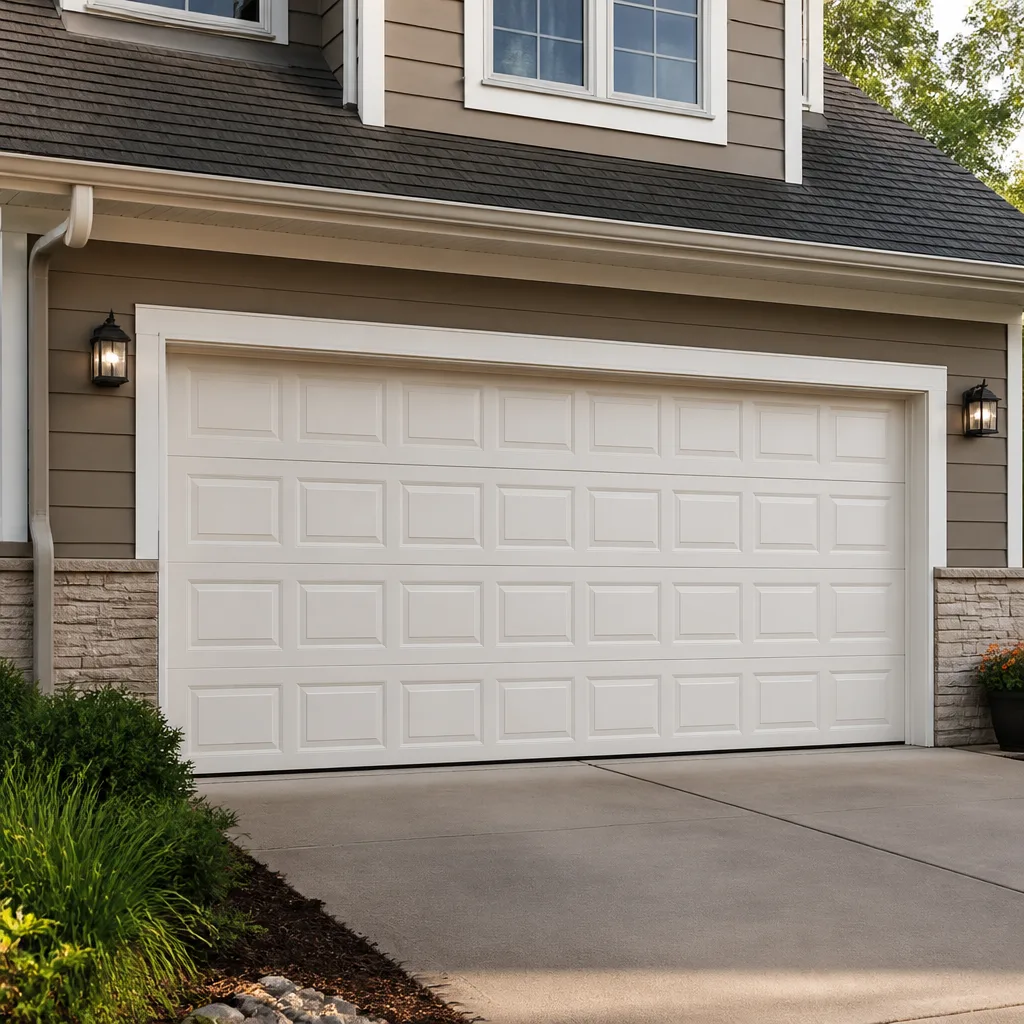 Raised-panel steel
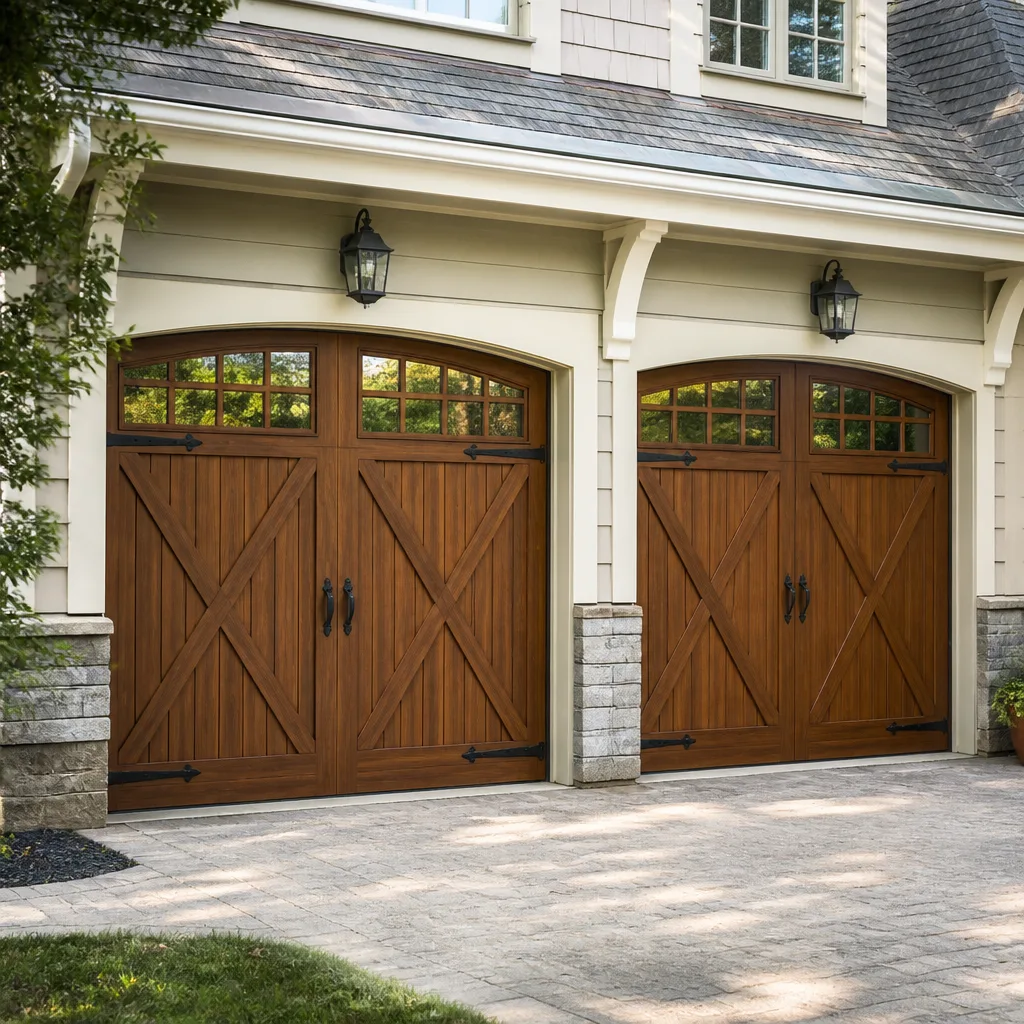 Carriage house
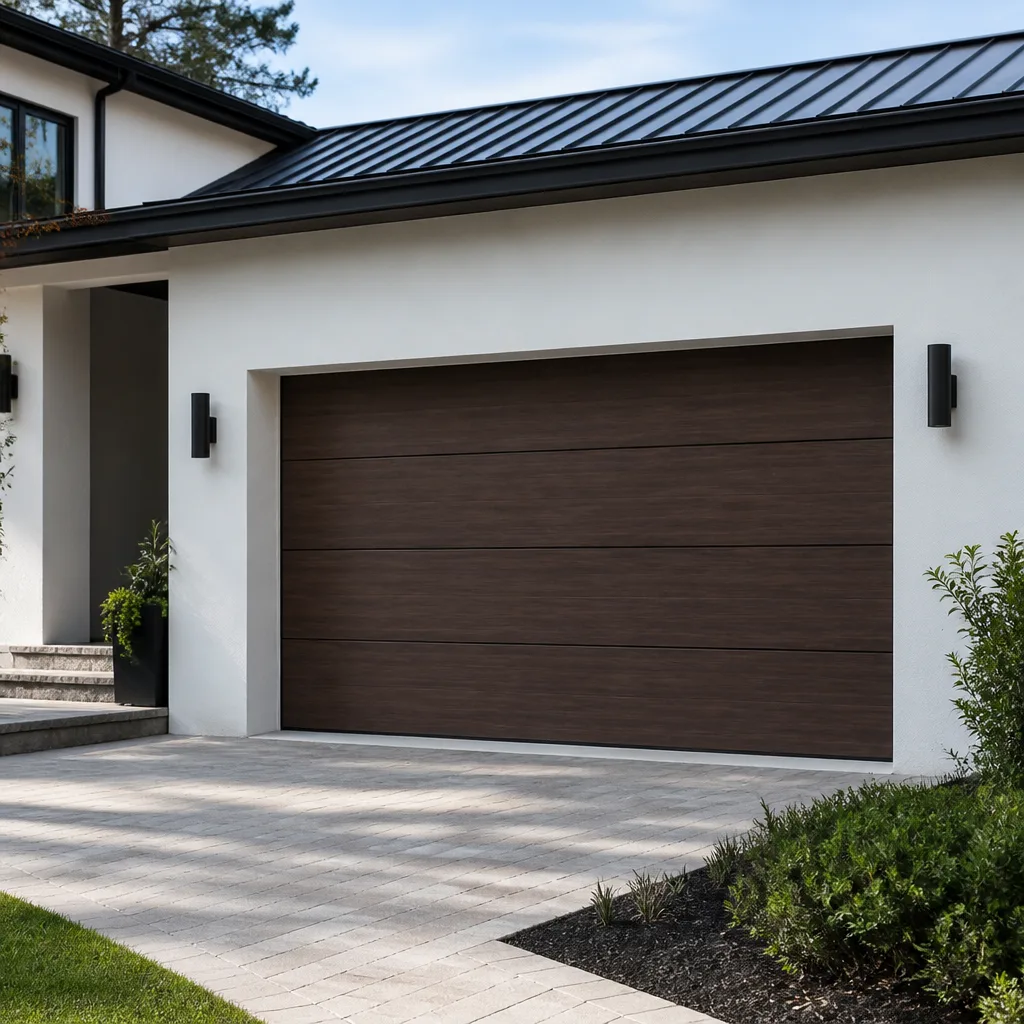 Modern flush
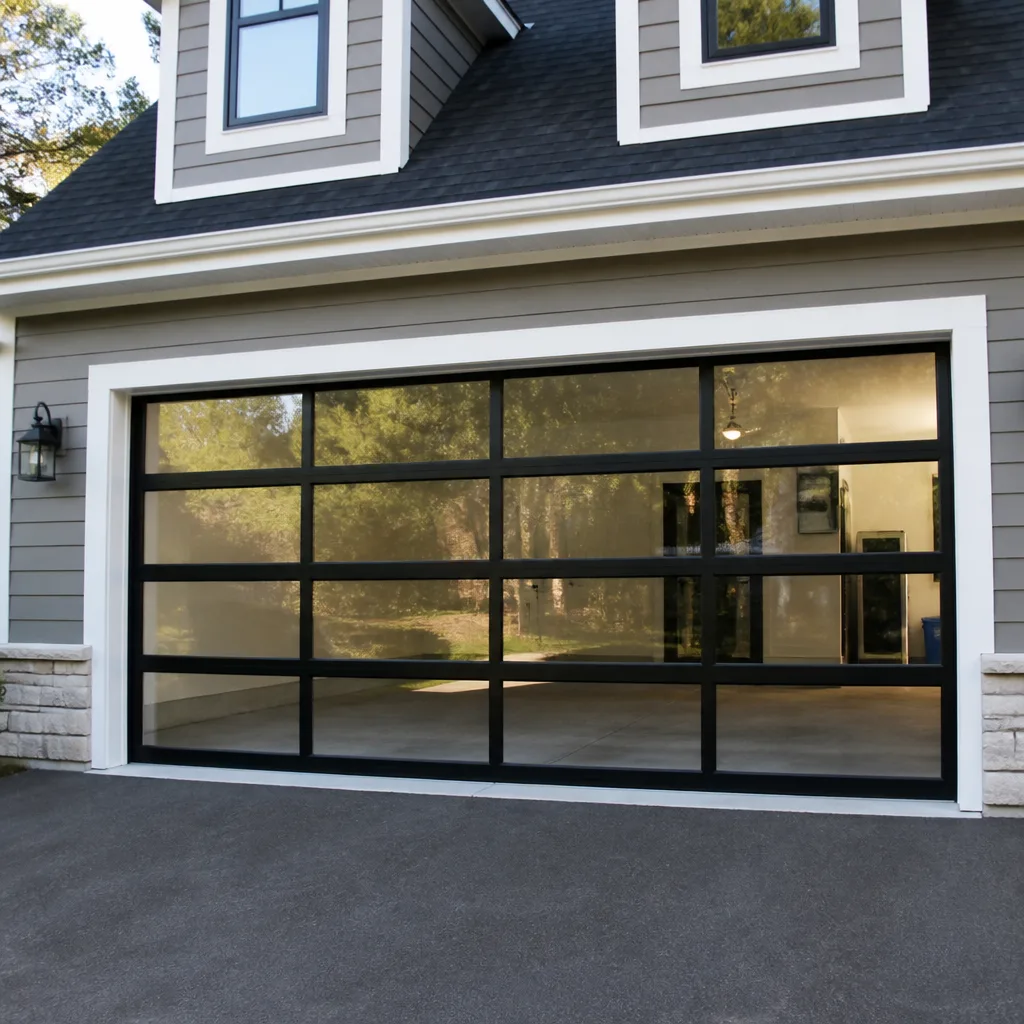 Full-view glass
 LiftMaster openers
 Chamberlain openers
Full 25-point door and opener safety check with every visit - springs, cables, rollers, tracks, and your LiftMaster or Chamberlain opener included
You get a price before we start. It does not change when the truck arrives.
Get your free estimateGarage Door Warning Signs: An Orange Homeowner’s Reference Guide
Most Orange homeowners describe every garage door problem the same way: “It’s acting weird.” But a door that reverses before closing fully and a door that reverses immediately after touching the ground are two completely different problems with different causes, different urgency levels, and different repair costs. The first usually points to a misaligned photo-eye sensor. The second often means a failing logic board or a limit switch that has drifted out of adjustment. In this guide, we’ll walk through the warning signs we see most often in Orange garages, organize them by which part of the system is failing, and tell you which ones demand immediate action and which can wait a few days.
Quick Answer
Garage door warning signs fall into five system zones: springs and cables, tracks and rollers, the opener, the door panels, and the weatherseals. The most urgent signs are a door that drops when released, visible cable fraying, or a spring with a visible gap, because these indicate stored tension that can fail suddenly. Less urgent but still important are grinding noises, slow operation, and seal deterioration, which usually signal wear that will worsen without intervention but rarely cause immediate safety hazards.
Styles & brands we work with
- Raised-panel steel
- Carriage house
- Modern flush
- Full-view glass
- LiftMaster openers
- Chamberlain openers
Table of Contents
- Spring and Cable Warning Signs
- Track and Roller Warning Signs
- Opener Warning Signs
- Panel Warning Signs
- Weatherseal Warning Signs
- Sounds That Mean Something: A Noise-to-Component Map
- Orange-Specific False Alarms
- Common Mistakes to Avoid
- When to Call a Professional
- Frequently Asked Questions
Spring and Cable Warning Signs
Your garage door’s springs hold the counterweight that makes a 150-pound door feel like it weighs 10 pounds. When they start failing, the signs are specific and predictable. The challenge in Orange is that our climate accelerates spring fatigue slightly: the temperature swings between coastal-cool mornings and inland-hot afternoons put repeated thermal stress on torsion springs, especially on west-facing garage doors that bake in the afternoon sun.
Most likely cause of a door that feels heavy when you pull the emergency release: a spring that has lost tension or broken. Second most likely cause: a cable that has slipped off its drum, which drops all the tension onto one side of the door. Here’s the distinction: if the door feels heavy and pulls to one side, the cable is the culprit. If it feels uniformly heavy and hangs dead in the tracks, the spring has lost its load.
Specific warning signs, in order of urgency:
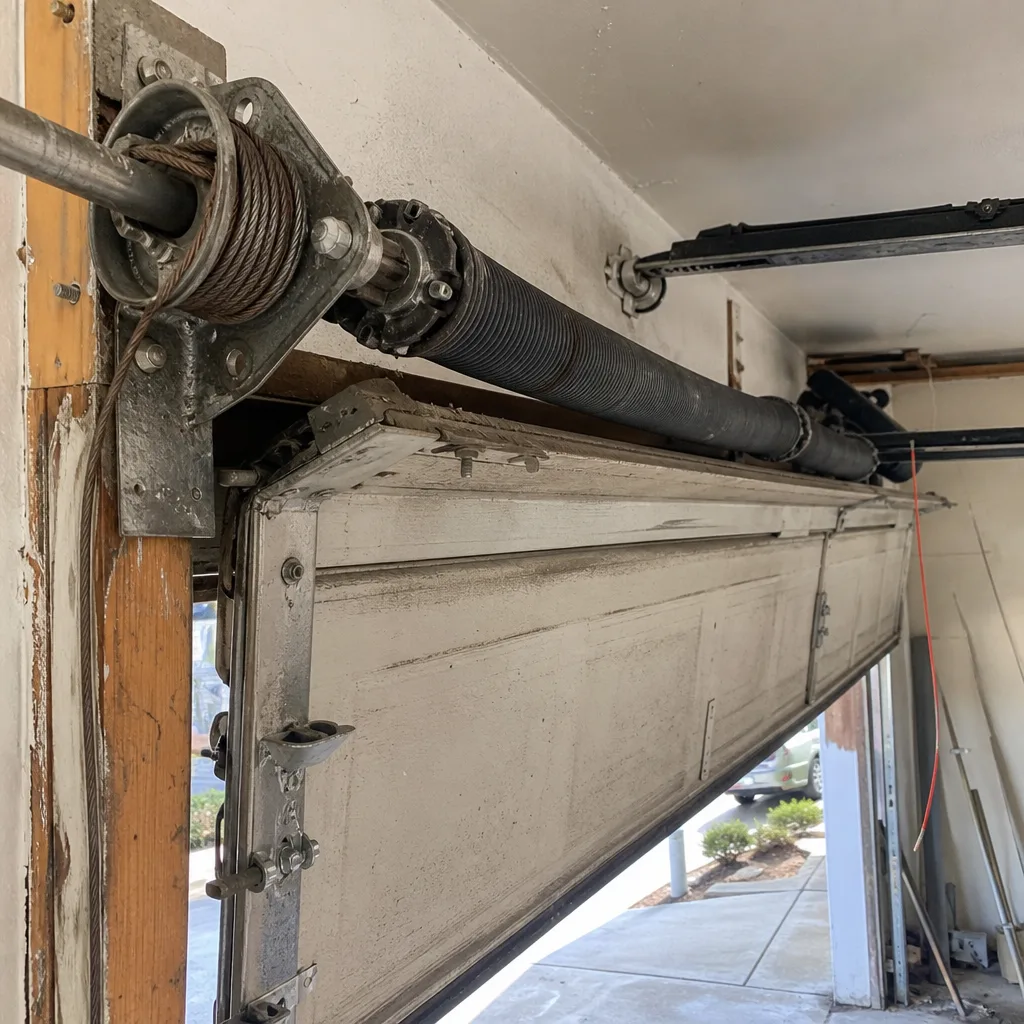
- Visible gap in a torsion spring: this is the stop-using-now sign. A torsion spring with a visible separation has already snapped and is no longer counterbalancing the door. The door can drop hard if the other spring lets go.
- Frayed cables: look at the cables running along both sides of the door. If you see individual wire strands poking out, that cable is days or weeks from snapping. Stop using the door and call a technician.
- Door drops 12 to 18 inches when released from the opener: this means the springs are losing tension. It’s operate-with-caution territory. The door still works, but every cycle is hardening the remaining spring metal toward a break.
- Loud bang from the garage that sounds like a firecracker: that’s a spring snapping under load. The door will not open manually or with the opener. Do not attempt to raise it; the remaining spring may be compromised.
One note for Orange homeowners with homes built before 2000: if your springs are the older exposed-torsion style without a containment cable, a spring break can send shrapnel across the garage. Most modern installations include safety containment, but if you’re unsure what you have, a Garage Door Repair in Orange technician can assess it in about five minutes.
Track and Roller Warning Signs
The track and roller system is the guidance mechanism. It’s where wear shows up gradually instead of all at once. In Orange, we see track and roller problems accelerated by two local factors: fine dust from the hills that accumulates in the tracks and acts as an abrasive, and the seasonal Santa Ana winds that push doors slightly out of level when the wind loads the panels.
Most likely cause of a door that shudders mid-travel: a bent track section or a roller that has seized and is dragging. Second most likely cause: a track that has shifted out of alignment because the mounting bolts have loosened over years of vibration. The distinction is visual: a seized roller has a flat spot or visible deformation; a misaligned track shows uneven wear marks on the inside face of the rail.
Watch for these signs:
- Metal shavings or black dust at the bottom of the track: this is roller material grinding away. It means a roller bearing has failed and the wheel is sliding instead of rolling.
- Door hesitates at the same point on every cycle: the track has a narrow spot, usually from a bend or a shifted bracket. The door is fighting the track instead of following it.
- Visible wobble in the door when moving: one or more rollers have excessive play, or the track gap has widened. The door is no longer guided cleanly.
- Nylon roller debris on the garage floor: nylon rollers delaminate over time. If you find small white or gray fragments, the rollers are disintegrating and should be replaced before the steel core starts carving into the track.
Urgency tier: schedule-within-a-week. A door that’s binding in the track won’t usually fail catastrophically, but every forced cycle adds stress to the opener’s drive gear and the springs. Let it go too long and a $40 roller replacement becomes a $400 opener gear job.
Opener Warning Signs
The opener is the brain and the muscle of the system. It’s also the component Orange homeowners interact with most, which means its warning signs are the ones people notice first. The opener communicates through behavior: how the door moves, how the motor sounds, and how the safety features respond.
Most likely cause of a door that reverses before closing fully: misaligned photo-eye sensors. The sensors at the bottom of the track send an invisible beam across the opening, and if that beam is broken or the sensors are out of alignment, the opener interprets it as an obstruction and reverses. Second most likely cause: an over-sensitive force setting that reads normal track resistance as an obstruction. This is especially common in Orange on hot afternoons, when the door’s metal expands and moves slightly more stiffly in the tracks, triggering a false obstruction reading.
Most likely cause of a door that reverses immediately after touching the ground: a failing limit switch or a worn drive gear inside the opener. The opener thinks it’s closing too far and springs back. Second most likely cause: a track misalignment at the fully-closed position that creates a torque spike, which the opener’s safety circuit reads as an impact. This distinction matters: the first is an opener repair, the second is a door track adjustment. Calling a company that only does openers or only does doors means a 50/50 chance of a wrong diagnosis. We diagnose and service the door and the drive system together, which is why Garage Door Opener Repair in Orange should cover both.
Additional opener signs to watch:
- Opener runs but the door doesn’t move: the drive gear has stripped. This is common on openers older than 10 years, especially in Orange’s heat, which accelerates plastic gear degradation.
- Door opens fine but struggles to close: the opener’s force output is failing, or a spring has lost enough tension that the opener is now doing double duty. This is the most common missed diagnosis we see: homeowners think the opener is dying when actually the springs are the root cause.
- Opener hums for a second then stops: the capacitor is failing. This is an inexpensive part but requires opening the motor housing, which we don’t recommend for anyone uncomfortable with live capacitors.
- Remote range has shrunk to a few feet: the receiver antenna is failing or the logic board is degrading. In some Orange neighborhoods, newer LED bulbs in the garage can also interfere with older opener radio frequencies.
Panel Warning Signs
The panels are the visible face of the door, and their warning signs are usually cosmetic until they aren’t. Damage that looks superficial can hide structural weakening that changes how the door balances and moves.
Most likely cause of a panel that’s beginning to delaminate: moisture intrusion between the steel skin and the insulation core, often from a failed seal at the panel joint. In Orange’s coastal-influenced humidity, this is more common than most homeowners expect. Second most likely cause: impact damage from a vehicle bump or a kids’ basketball that compromised the panel’s outer skin and let water in.
Specific panel signs to monitor:
- Visible denting or creasing, especially on the bottom panel: the bottom panel takes impact and also bears the load of the door’s weight transfer. A dented bottom panel shifts that load unevenly, which changes spring balance calculations.
- Rust streaks running down from a panel seam: this is active corrosion inside the panel sandwich. The rust will continue spreading behind the paint until the panel loses structural integrity.
- Door appears to sag in the middle when closed: the top panel’s strut reinforcement is bending or has already bent. This is more common on single-wide doors that face direct afternoon sun in Orange, where repeated thermal cycling fatigues the reinforcement.
- Panel separations at the seams: the stiles connecting panels are beginning to pull away. The door is losing its rigid shape and will eventually bind in the tracks.
Urgency tier: most panel damage is schedule-within-a-week unless the door is visibly sagging or binding. A sagging door in a closed position is putting constant strain on the spring system even when it’s not moving. If your panels are beyond repair, our Garage Door Installation in Orange team can quote a replacement door with brand-informed recommendations for Amarr, Wayne Dalton, or Raynor panels to match your existing look or upgrade it entirely.
Weatherseal Warning Signs
The weatherseal is the easiest component to ignore and the one Orange homeowners pay for ignoring. A failing seal lets in dust, moisture, pests, and in the Santa Ana season, enough fine particulate to coat everything in the garage with a gritty film. It also costs you cooling efficiency in summer when conditioned air from the house leaks into the garage.
Most likely cause of a weatherseal that has pulled away from the door: the seal material has stiffened and lost its grip on the aluminum retainer channel, usually after four to six years of Orange sun exposure. Second most likely cause: a vehicle or object was dragged across the threshold and physically pulled the seal out.
Signs the seal needs replacement:
- Visible daylight under the door when closed: this is the simplest check. Close the door and look at the threshold from inside the garage. If you see light, the seal isn’t sealing.
- Leaves, dust, and debris accumulating inside the garage along the door line: the seal has compressed or cracked, and the wind is pushing material through the gap.
- Water staining on the garage floor near the door after rain: the seal has failed and water is wicking under the door. In Orange’s winter storm cycles, this can soak cardboard boxes and damage anything stored at floor level.
- Spider webs concentrated at the bottom corners of the door: spiders build where airflow tells them insects will travel. A concentration of webs at the door’s bottom corners usually means the seal has a gap there.
Urgency tier: schedule-within-a-week. A failed seal won’t cause a mechanical failure, but it’s an open invitation for moisture and pests, and in an Orange garage, it’s the difference between a clean storage space and a gritty mess by August.
Sounds That Mean Something: A Noise-to-Component Map
Garage doors have a vocabulary. Each noise corresponds to a specific component under a specific kind of stress. Learning to distinguish them means you can describe the problem accurately on the phone, which gets you a faster and more accurate diagnosis.
- Grinding: the roller bearings are shot, or the opener’s drive gear is stripping. If the grinding happens when the door is moved manually, it’s the rollers. If it only happens when the opener runs, it’s the drive gear. Grinding that persists after manual testing means the rollers are the problem.
- Popping: a torsion spring is binding and releasing against its mounting cone, or a cable is slipping one notch on the drum. This is a warning sign that the spring system is no longer rotating cleanly.
- Rattling: loose hardware, usually track mounting brackets or hinge screws. This is the most common noise we hear in Orange, because our seasonal temperature swings expand and contract metal repeatedly, gradually working fasteners loose.
- Squealing: metal-on-metal contact at a hinge point or roller stem. It means lubrication has failed and the parts are wearing against each other. A quick shot of lithium grease at the hinge points can quiet it, but if the squeal persists, the roller is already past saving.
- Scraping: the door is physically dragging against something: the track, the jamb, or the concrete at the opening. This is usually a track alignment issue or a door that has shifted on its hinges.
- Thumping that you feel through the floor: the door is out of balance and the opener is fighting to move it. Each thump is the door momentarily binding and releasing in the track.
A quick diagnostic protocol we use: run the door through a full cycle and listen. Then disconnect the opener using the red emergency release cord and run the door manually through the same cycle. If the noise persists with the opener detached, the problem is in the door mechanics. If it disappears, the opener is the culprit. This single test separates door problems from opener problems in about 30 seconds, and it’s the first thing we ask homeowners to try before we arrive.
Orange-Specific False Alarms
Not every garage door anomaly is a mechanical failure. Orange’s climate and soil create three false alarms we see repeatedly, and knowing them can save you an unnecessary service call or a panicked afternoon.
- Sensor misalignment from ground settling. Orange sits on varied soil composition, from harder packed clay in the hills to looser alluvial soil in the flats. Over time, the garage slab can settle slightly, which shifts the door frame, which shifts the photo-eye sensors out of alignment. The door then reverses randomly, and you think the opener is failing. The fix is usually a five-minute sensor realignment, not an opener replacement.
- Photo-eye obstruction from spider webs. Orange’s warm climate supports year-round spider activity, and garage door sensors are a prime web-building spot. A single strand of silk across the sensor lens can break the infrared beam and cause intermittent reversals. The test: wipe both sensor lenses with a dry cloth. If the door works normally afterward, you found the culprit.
- Expansion-related binding in hot afternoon hours. Steel garage doors expand in heat. On 95-degree Orange afternoons, especially on west-facing doors, the metal panels swell enough to bind slightly in the tracks, triggering the opener’s obstruction sensing. The door reverses once or twice, then works fine once the sun drops. This isn’t a failure: it’s thermal expansion, and the fix is a track clearance adjustment, not a new opener.
The common thread across all three: the door behaves erratically for a few cycles, then works normally again. Intermittent problems are almost always sensor-related or environmental. Consistent problems that happen every cycle are almost always mechanical.
Common Mistakes to Avoid
- Spraying WD-40 on everything. WD-40 is a solvent, not a lubricant. It will strip whatever lubricant remains from your rollers and hinges, making the problem worse within a month. Use lithium grease on metal-to-metal parts and a silicone-based lubricant on nylon components.
- Manually forcing a door that has dropped after a spring break. The door weighs between 130 and 250 pounds. Once a spring lets go, that weight is unsprung, and the door can come down hard enough to cause serious injury. If the door won’t lift easily with the manual release, stop.
- Adjusting torsion springs without the right tools and training. Torsion springs hold enough stored energy to break bones or worse if they release while you’re working on them. This is not a DIY job, and no YouTube video changes that.
- Ignoring a noisy door because “it still works.” Noise is the earliest warning sign a mechanical system gives you. A grinding roller today is a bent track next month and a stripped opener gear the month after. Addressing noise early is the cheapest garage door repair you’ll ever make.
- Replacing the opener without checking the door balance first. In at least a third of the “opener failure” calls we take in Orange, the opener is fine and the springs are shot. The opener has been working double duty, and the homeowner replaced the wrong part.
- Assuming all garage door companies service all brands. Some companies are factory service programs for a single manufacturer and won’t touch other brands. We work on what you already have, including LiftMaster, Chamberlain, Genie, Clopay, Amarr, Wayne Dalton, Craftsman, and Raynor systems, so a brand mismatch never leaves you without options.
When to Call a Professional
Call a professional the same day if your door makes a loud bang and stops working, if you see a visible gap in a torsion spring, if the cables are fraying, or if the door drops hard when you pull the manual release. These are stop-using-now conditions with genuine injury risk. Call within a week for grinding noises, binding in the tracks, failed weatherseals, or panel damage that hasn’t yet affected movement. For anything in between, your best move is a diagnostic call. We identify the problem before we quote the solution, so you’ll know exactly what’s wrong and what it costs before agreeing to any work. Citadel Garage Door Repair’s home base is Orange, and we offer free estimates throughout the area. Call (844) 320-8271 and we’ll help you determine whether the door needs a repair, a part replacement, or a conversation about whether replacing the whole system is the smarter long-term call.
Frequently Asked Questions
Garage door spring replacement in Orange typically costs between $180 and $340 for a pair of torsion springs, including the springs, installation, and balancing. Single-spring replacements run $120 to $200, though we almost always recommend replacing both springs together because they share the same fatigue cycle and the second one usually breaks within months of the first. Call (844) 320-8271 for an exact quote, and we’ll confirm the price before any work starts.
Yes, for most repair issues, same-day service is available throughout Orange. Spring replacement, cable repair, sensor realignment, and roller swaps are all stock-on-truck jobs that take 45 minutes to 2 hours. New door installations are measured, ordered, and scheduled, usually within 7 to 14 days, because custom sizing and panel configuration can’t be done from truck stock.
No. The price we quote on the phone or during the diagnostic visit is the price you’ll pay, assuming the diagnosis matches what we discussed. If we open the door and find a second problem that changes the scope, we’ll show you what we found and get your approval before adding anything. No surprise line items on the invoice.
In Orange, the three most common causes of unexplained door reversals are misaligned photo-eye sensors from slab settling, spider webs blocking the sensor lens, and thermal expansion of the door panels on hot afternoons. All three are fixable without replacing the opener, and the first two can often be resolved by cleaning the sensor lenses and checking their alignment.
Standard torsion springs in Orange last 7 to 10 years on average, rated for about 10,000 cycles. That’s about 7 to 10 years of normal use, opening and closing twice a day. If your springs are older than 7 years and the door is starting to feel heavy or showing signs of cable wear, a preemptive replacement is usually cheaper than an emergency call after the spring snaps.
We work on what you already have. Our technicians are factory-familiar with LiftMaster, Chamberlain, Genie, Clopay, Amarr, Wayne Dalton, Craftsman, and Raynor systems, which covers the vast majority of garage doors and openers found in Orange homes. We’re not locked into pushing one manufacturer, so the recommendation you get is based on your system and your budget, not a supplier relationship.
The Bottom Line
A garage door is a mechanical system that talks to you through its symptoms. The key is learning to listen accurately: which part is making the noise, whether the problem follows the door or the opener, and whether the failure mode demands immediate action or can wait for a scheduled visit. For Orange homeowners, the most important habit is distinguishing real mechanical failures from the climate-driven false alarms that come with living where slabs settle, spiders thrive, and afternoon heat warps steel. When you can describe the problem precisely, you get a better diagnosis, a more accurate quote, and a repair that addresses the root cause instead of the symptom. Our team handles the full spectrum of garage door repair, opener repair, and new installation in Orange. Call (844) 320-8271 when your door starts telling you something. We’ll translate.
Written by the team at Citadel Garage Door Repair, serving Orange since 2018.
See the difference
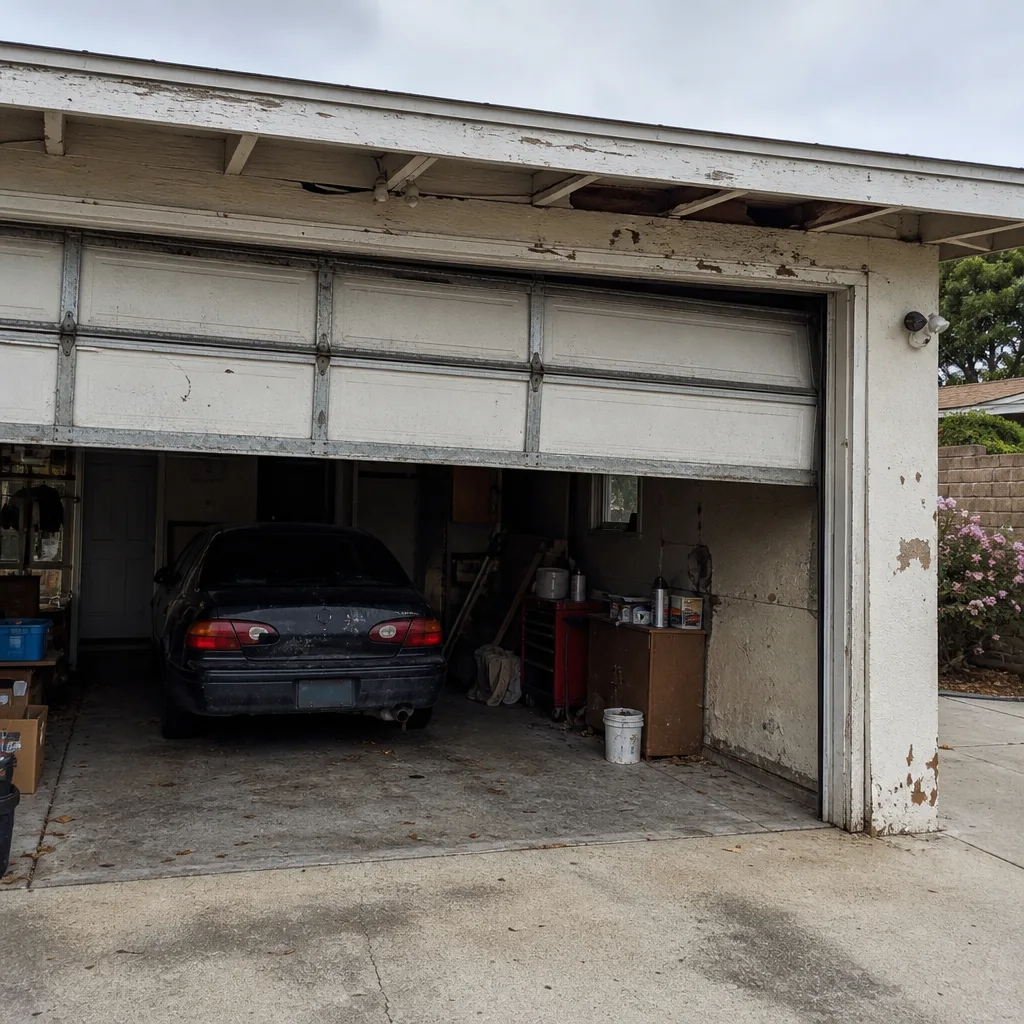 Before
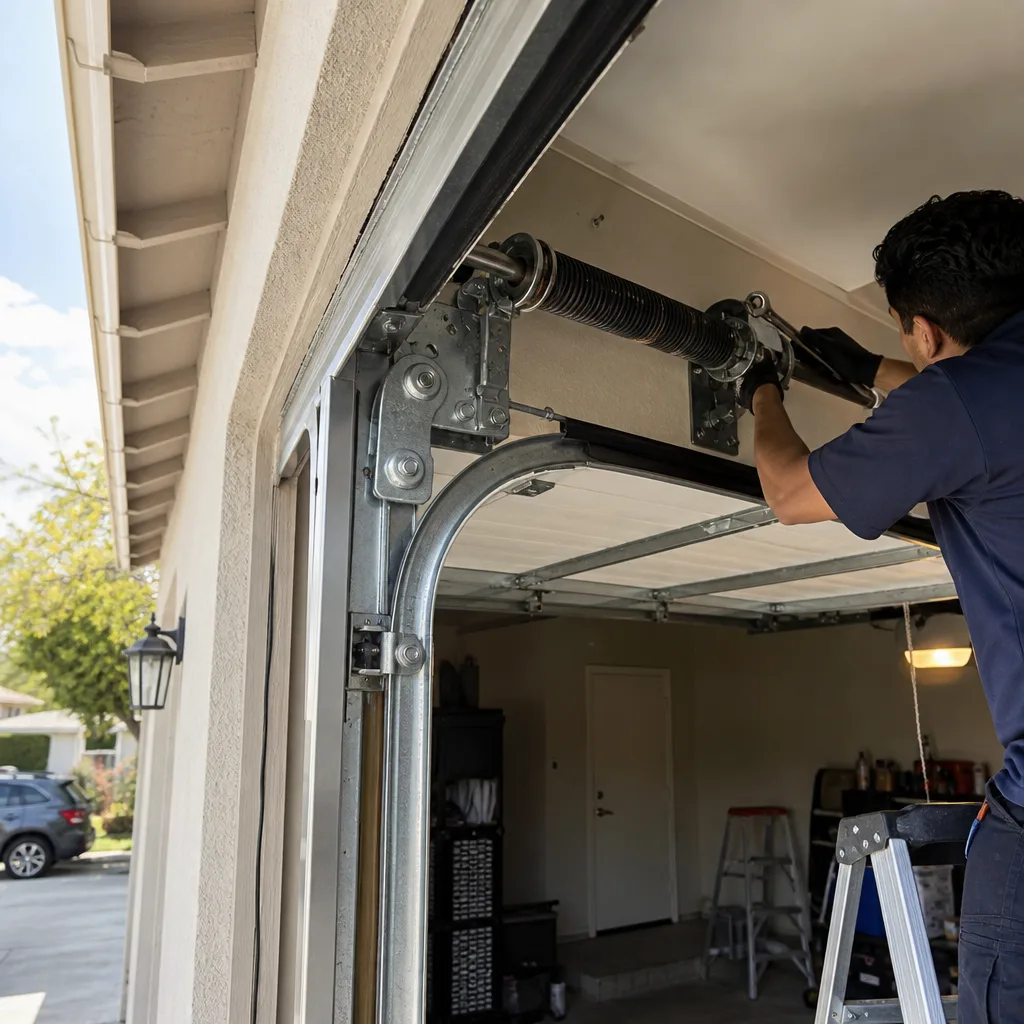 After
 Before
 After
 Before
 After