
Last updated November 2, 2026
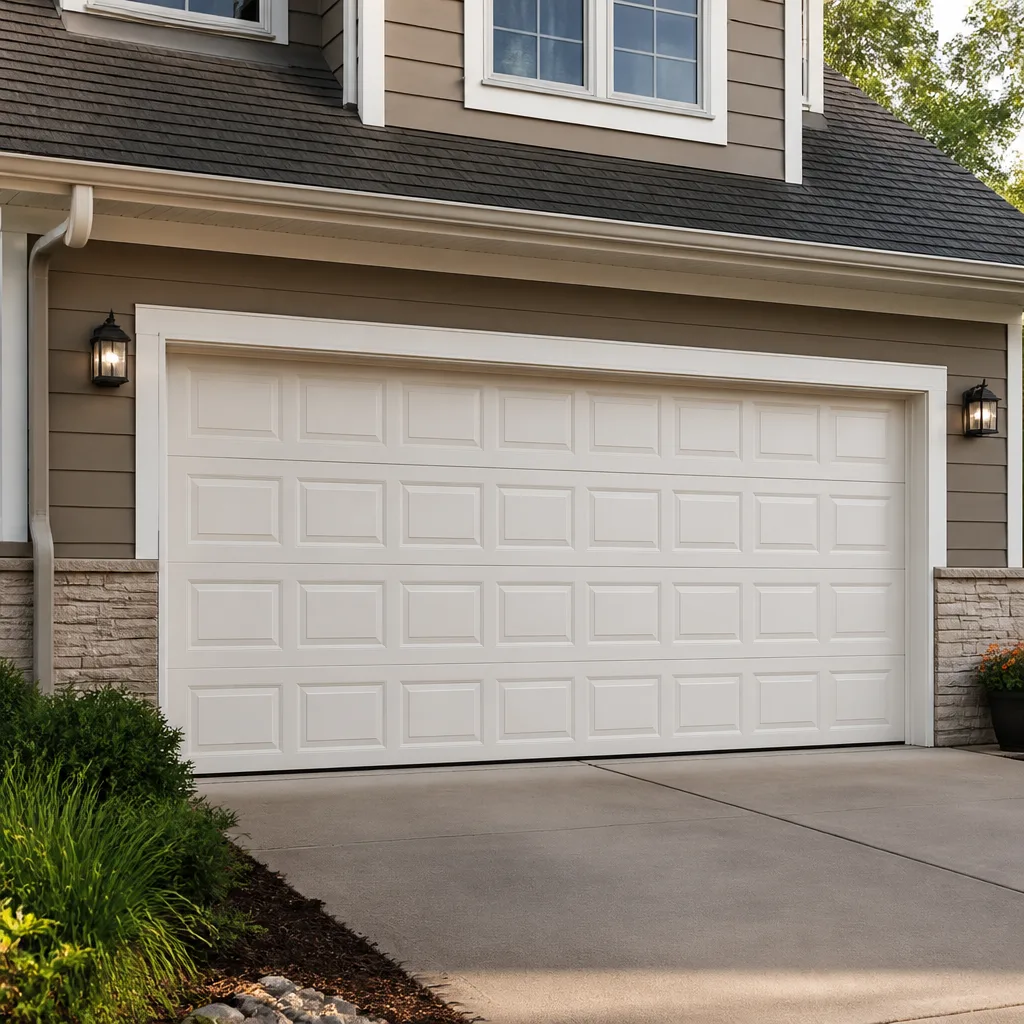 Raised-panel steel
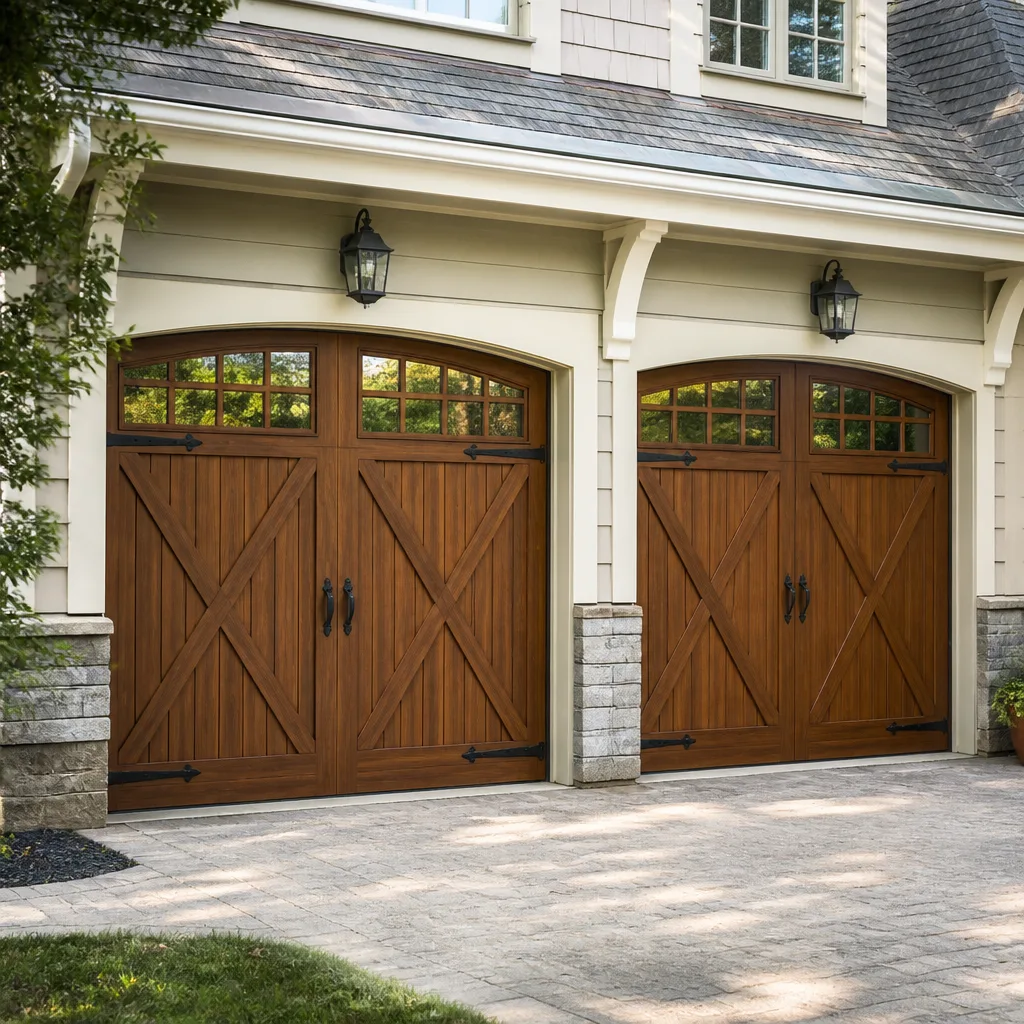 Carriage house
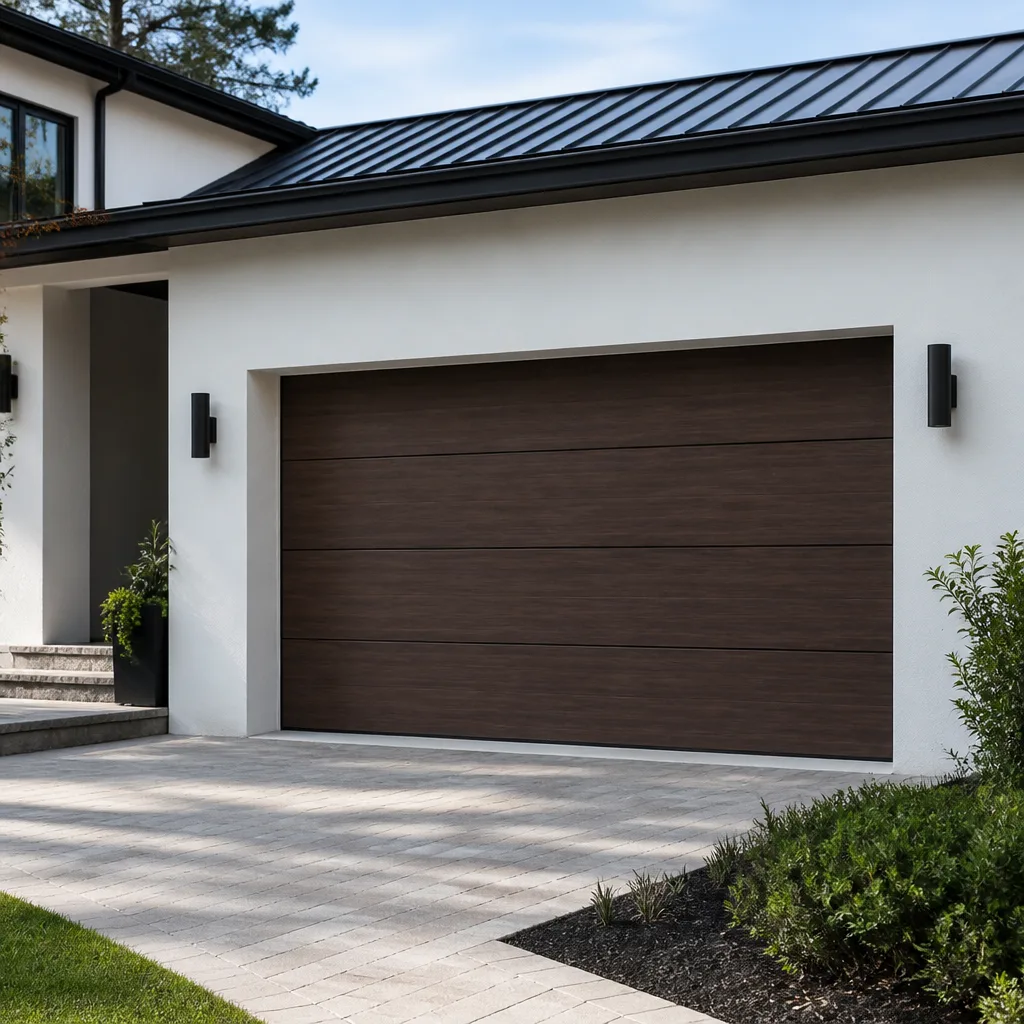 Modern flush
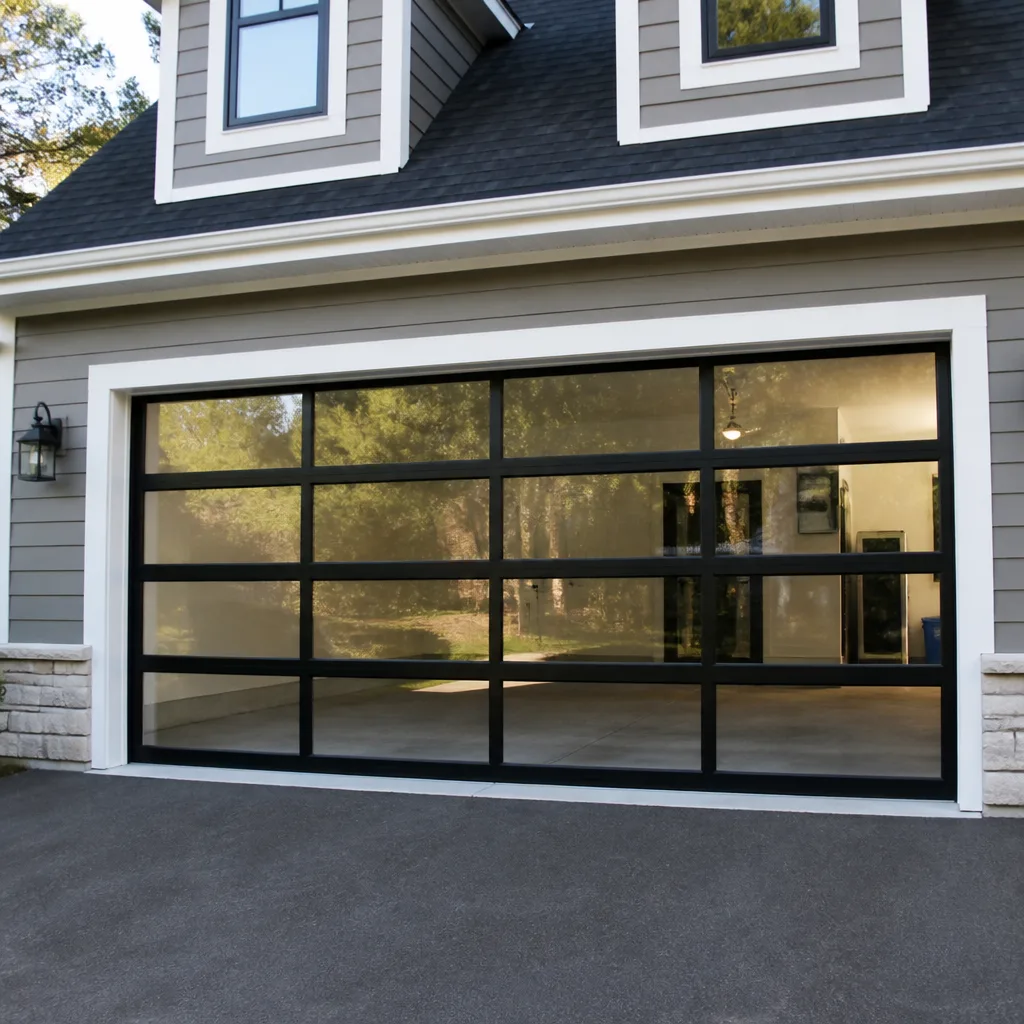 Full-view glass
 LiftMaster openers
 Chamberlain openers
Full 25-point door and opener safety check with every visit - springs, cables, rollers, tracks, and your LiftMaster or Chamberlain opener included
You get a price before we start. It does not change when the truck arrives.
Get your free estimateSeasonal Garage Door Care for Orange: Year-Round Homeowner’s Guide
Most seasonal maintenance guides treat a garage door like it lives in Ohio. Orange doesn’t work that way. We don’t get snowpack or freeze-thaw cycles, but we do get something arguably harder on hardware: the Santa Ana wind. When those offshore gusts push through Orange County each fall, ambient temperatures can swing 20 to 30 degrees in a matter of hours. That rapid thermal expansion and contraction stresses torsion springs, loosens track bolts, and cracks weatherstripping faster than any cold snap ever could. This guide explains what actually wears down garage door systems in our climate, when it happens, and what to do before each stress period arrives. If you’ve ever wondered why your door suddenly starts grinding in October or sticking in August, the answer is usually seasonal and usually preventable.
Quick Answer
Seasonal garage door care in Orange means scheduling maintenance around three real stress periods rather than four calendar seasons: the summer heat cycle from May through September, the Santa Ana wind season from October through December, and the marine layer moisture period from January through April. Focus on spring and track lubrication before summer, weatherstripping and hardware inspection after Santa Ana events, and rust prevention during the damp months. A properly maintained door should operate quietly and smoothly year-round, with a visual check taking no more than fifteen minutes per season.
Styles & brands we work with
- Raised-panel steel
- Carriage house
- Modern flush
- Full-view glass
- LiftMaster openers
- Chamberlain openers
Table of Contents
- Orange’s Three Real Stress Seasons (And Why the Traditional Calendar Fails Here)
- The Summer Heat Cycle: May Through September
- Santa Ana Season: October Through December
- The Marine Layer Period: January Through April
- UV Exposure and Material Degradation: What Actually Fades, Cracks, and Fails
- Opener Motor Heat Management: When Your Garage Faces West
- A Seasonal Maintenance Schedule That Fits Orange’s Rhythm
- Common Mistakes to Avoid
- When to Call a Professional
Orange’s Three Real Stress Seasons (And Why the Traditional Calendar Fails Here)
Winterizing your garage door in Orange is about as useful as putting chains on your tires in July. The conventional four-season maintenance advice you find online was written for places with freezing temperatures, snow load, and road salt. Orange has none of those. What we do have is a Mediterranean climate with distinct dry heat, seasonal wind events, and a persistent morning marine layer that brings moisture without rain. Each of these creates specific wear patterns on garage door components, and each requires a different preparation approach.
The first thing to understand is that your garage door is not a sealed unit. It’s a system of moving parts that expands and contracts with temperature changes. In a climate like Orange’s, where an October day might start at 52 degrees and hit 89 by early afternoon, that expansion cycle happens daily for weeks at a time during Santa Ana season. Metals expand and contract at different rates depending on their composition. The steel in your torsion spring, the aluminum in your track brackets, and the galvanized hardware holding everything together all move at slightly different speeds. Over time, that differential movement loosens bolts, shifts track alignment, and causes the kind of subtle wear that eventually becomes a loud grinding noise or a door that won’t close all the way.
Here’s how the three stress seasons break down in Orange:
- Summer heat cycle (May – September): High ambient temperatures soften lubricants, cause them to thin and drip off pivot points. UV radiation attacks weatherstripping and panel finishes. Opener motors run hotter, especially in west-facing garages that bake in the afternoon sun.
- Santa Ana season (October – December): Rapid temperature swings stress springs and hardware through repeated expansion-contraction cycles. Wind-blown debris gets forced into tracks, roller channels, and between panels. Fine dust settles on lubricated surfaces and creates an abrasive paste.
- Marine layer period (January – April): Morning fog and coastal moisture promote surface rust on unprotected hardware. Damp air interacts with accumulated dust to form gunk in hinges and rollers. The cooler, more stable temperatures mean mechanical failures are less frequent, but corrosion does quiet work.
This is the rhythm we work with at Citadel. When a homeowner in Orange calls us for a Garage Door Repair in Orange in late November, we can usually trace the failure back to a component that was stressed during Santa Ana season and never checked. Understanding this cycle is the difference between reacting to breakdowns and preventing them.
The Summer Heat Cycle: May Through September
Summer is when your garage door works hardest, though you might not notice it. The mechanical stress isn’t dramatic like a winter ice dam. Instead, it’s a slow, cumulative degradation driven by heat and UV exposure. By the time August arrives, components that seemed fine in April can be on the edge of failure.
The primary mechanism at work is lubricant breakdown. Garage door lubricants are formulated to stay in place on metal surfaces, but they have temperature limits. When your garage interior hits 100 degrees or more, which happens regularly in Orange between June and September, standard petroleum-based lubricants thin out. They drip off hinges, roller bearings, and spring coils. The metal surfaces then run dry, and dry metal on metal is how you get the squeal that announces itself the first time you open the door on a hot afternoon.
What we see most often in Orange summers is this sequence: a door that was lubricated in the spring runs smoothly through May and early June. By late July, the lubricant has migrated or evaporated. The homeowner notices a new noise but assumes it’s the heat. By September, a roller bearing has worn flat, the door vibrates in its tracks, and what started as a $15 maintenance issue becomes a garage door repair call with a parts replacement.
Do this before summer heat peaks:
- Re-lubricate with a heat-stable product. Use a lithium-based or synthetic garage door lubricant rated for high temperatures. Apply to hinges, roller bearings, the torsion spring coils, and the lock mechanism. Avoid WD-40, which is a solvent, not a long-term lubricant. It cleans effectively but leaves surfaces dry within days.
- Check the torsion spring for corrosion and coil gaps. Torsion springs under tension are the single highest-wear component on your door. Look for rust, which weakens the metal and shortens spring life. Also look for gaps between coils, which indicate the spring is starting to yield. If you notice either, do not attempt to adjust the spring yourself. These are under extreme tension and can cause serious injury. Call a professional who works with springs regularly.
- Inspect weatherstripping at the bottom of the door and along the frame. UV exposure is relentless during Orange summers. Rubber compounds harden, crack, and lose their seal. Damaged bottom seal allows hot air, dust, and pests into the garage.
- Clean the tracks. Use a dry cloth to remove accumulated dust and grime from the vertical and horizontal track sections. Do not apply grease to the tracks – rollers need traction against the track surface to rotate properly. Greased tracks collect dust and cause roller slide instead of roll.
- Test the auto-reverse safety function. Place a 2×4 flat on the floor under the door’s path and close the door. It should reverse within seconds of contacting the wood. This is a safety system, and it’s more likely to fail in summer when heat expansion can shift sensor alignment.
The summer cycle is the easiest to prepare for because it’s the most predictable. Orange heat isn’t a surprise. What surprises homeowners is how fast heat-related wear accelerates once a component starts to degrade. A door that’s smooth in June and grinding in August didn’t suddenly break – it ran out of protection.
Santa Ana Season: October Through December
Santa Ana winds are the most underrated threat to garage door systems in Orange. We think of them as a fire hazard, a nuisance that dries out sinuses and rattles patio furniture. But for a garage door, a strong Santa Ana event is a physical assault that combines three separate stressors: rapid temperature swings, airborne debris, and fine particulate dust.
The temperature swing is the first problem. Santa Anas are offshore winds that descend from the high desert, compressing and heating as they drop in elevation. A typical October day in Orange might start at 55 degrees before dawn, climb to 88 by afternoon, then drop back to 58 overnight. Your garage door’s metal components expand and contract through that cycle continuously for days or weeks. Torsion springs, which live under enormous tension, are particularly vulnerable. Each temperature cycle adds microscopically to metal fatigue. After enough cycles, a spring that was fine in September can fail in November. This is why we see a consistent spike in broken spring calls during Santa Ana season.
Debris is the second stressor. Santa Anas can gust to 50 mph or more in wind-prone areas of Orange County. Those gusts pick up leaves, twigs, seed pods, and loose gravel and drive them against your garage door. Debris gets wedged between door panels, forced into track channels, and lodged around the weatherstripping. A single eucalyptus branch lodged in a track bend can throw the door out of alignment, causing it to bind or scrape.
The third problem is dust. Santa Anas are notoriously dry, and they carry fine particulate matter from the inland deserts. That dust settles on every exposed surface, including your door’s lubricated hinges, rollers, and springs. The dust mixes with the lubricant to form an abrasive paste that actually accelerates wear. Every open-and-close cycle grinds that paste against the metal surfaces it was meant to protect.
After a Santa Ana event, do this:
- Visually inspect the door exterior. Walk the width of the door looking for dents, scratches, or debris wedged between panels. Door panels on homes in Orange with mature trees are especially vulnerable to falling branches and wind-blown seed pods.
- Clear the track channels. Use a flashlight to inspect both vertical tracks and the horizontal ceiling tracks. Remove leaves, twigs, or gravel by hand. Do not use a pressure washer or hose, which drives debris deeper and introduces water where it shouldn’t be.
- Wipe down rollers and hinges. Use a clean cloth to remove dust from all moving parts before it has a chance to form a grinding paste. This is especially important after the first strong wind event of the season.
- Check the balance. Disconnect the opener by pulling the emergency release cord, then manually lift the door to the halfway point. It should stay in place. If it drifts up or down, the springs are out of adjustment and need professional attention.
- Listen during the next cycle. Run the door through one full open-and-close. A smooth door should be nearly silent. Grinding, scraping, or rhythm-and-vibration sounds indicate a problem that’s still developing. Catching it now is cheaper than catching it after failure.
Santa Ana season is when your door takes the most abuse in the shortest time. The damage doesn’t always show up immediately, which is why we recommend a post-event visual check as standard practice for Orange homeowners.
The Marine Layer Period: January Through April
The damp months in Orange are subtle, and that’s what makes them dangerous. We don’t get real rain the way other regions do, but the marine layer brings morning fog, cool damp air, and elevated humidity from January through April. This is the season when rust and corrosion do their quiet work.
The problem is condensation. When warm, moist air from the Pacific meets the cooler metal surfaces inside your garage, water vapor condenses. This happens most often in the early morning when the marine layer is thickest. The condensation isn’t dramatic – no dripping water, no visible puddles – but it’s enough to create a thin film of moisture on unprotected steel hardware. Over weeks of repeated condensation cycles, surface rust forms on hinges, track brackets, and spring coils.
Rust on a garage door spring is more than cosmetic. Rust creates tiny pits in the metal surface, and those pits become stress risers – points where cracks can start and propagate. A torsion spring that’s heavily rusted is a spring that’s closer to failure. This is why spring inspection matters even in the season when the door gets less daily use.
For the marine layer period, focus on these tasks:
- Inspect all visible hardware for rust. Look at hinge plates, track brackets, and the torsion spring itself. Light surface rust can be wiped down and protected with a rust-inhibiting spray. Deep rust on a torsion spring means the spring should be replaced, not just treated.
- Check the weatherstripping that keeps moisture out. The bottom seal and perimeter seals are your door’s defense against damp air intrusion. If they’re cracked or compressed, moisture gets in and rust accelerates.
- Run the door through a full cycle at least once a week. Garage doors that sit unused for extended periods allow moisture to settle and corrosion to establish itself. Regular cycling distributes lubricant and prevents rust from gaining a foothold.
- Test the opener’s force settings. Damp conditions can cause rollers to bind slightly, and if the opener force is set too high, the door could close with enough pressure to damage something or injure someone. The auto-reverse test described in the summer section applies here too.
The marine layer months are also the best time for a professional inspection, because the work done now pays off through the stress seasons ahead. In our experience, an early-spring tune-up catches the rust and misalignment that winter moisture introduced, before summer heat amplifies it.
UV Exposure and Material Degradation: What Actually Fades, Cracks, and Fails
Orange gets a lot of sun. That’s not news to anyone who lives here. What’s less obvious is how that sun specifically attacks the non-metal parts of your garage door. UV radiation is the primary cause of material breakdown in weatherstripping, panel finishes, and certain decorative hardware. Over a single Orange summer, UV exposure does more damage than five years of normal use.
The most vulnerable component is the weatherstripping. Garage door bottom seals and perimeter seals are made from rubber compounds – typically PVC, EPDM, or TPV. These materials are formulated to stay flexible, but UV radiation breaks down the polymer chains over time. The result is a seal that looks fine from a distance but has lost its elasticity. Press on it and it stays compressed rather than springing back. That’s a failed seal. Once the bottom seal loses flexibility, it can’t conform to the floor surface, and gaps develop that let in dust, rain, heat, and pests.
Panel finishes are the next casualty. Steel doors from brands like Clopay, Amarr, and Wayne Dalton are coated with factory-applied finishes designed to resist UV fading, but no finish lasts forever under Orange sun. South-facing and west-facing doors face the most exposure. The first sign of UV damage is chalkiness – run your hand across the panel and it comes away with a fine residue. That’s the top layer of the finish breaking down. Color fading follows, and eventually bare metal is exposed, inviting rust.
Wood doors, which are less common in new Orange construction but still present on many older homes in established neighborhoods, take the worst UV damage. The varnish or paint protects the wood, but once UV breaches the coating, the wood itself begins to gray and crack. Regular re-sealing is the only defense.
Here’s what you’re protecting against:
- Rubber compound hardening: UV radiation crosslinks polymer chains, making flexible seals brittle. A brittle bottom seal cracks under normal door movement, and those cracks let moisture reach the door’s interior frame.
- Finish oxidation: The chalkiness on steel doors is oxidized finish material. Once it washes away in rain, the remaining finish is thinner and less protective.
- Hardware degradation: Nylon rollers and plastic bearing cups can become brittle from UV exposure, though these are generally inside the track and partially shielded. Window inserts on decorative doors take the most direct UV hit.
The fix is simple but requires consistency: inspect seals in spring before the UV season peaks, replace any that show signs of hardening or cracking, and consider a sealant or finish touch-up for doors older than ten years. The cost of replacement weatherstripping is modest. The cost of water damage, rusted interior hardware, or full panel replacement after finish failure is not.
Opener Motor Heat Management: When Your Garage Faces West
Garage door opener motors generate heat as they run, and they rely on ambient air to dissipate that heat. In Orange, where summer garage interiors can exceed 110 degrees, that cooling mechanism is already compromised before the motor even starts. A west-facing garage, which absorbs direct afternoon sun through the door and often the exterior wall, is the worst case. The door itself becomes a thermal mass that radiates heat into the interior space for hours after sunset.
Most residential openers have thermal protection circuits that shut the motor down if it gets too hot. That’s the clicking sound you hear when the opener refuses to run on a hot afternoon after multiple cycles. The motor tripped its thermal overload. If this happens, don’t immediately assume the opener is broken. Let it cool down, and it should resume operation. But repeated thermal trips indicate a deeper problem: the motor is working harder than it should, and extra load means extra heat.
What makes a motor work harder in Orange’s heat? Several things we see regularly in the field:
- Dry or binding rollers: If the door doesn’t move smoothly, the motor strains to compensate. That strain shows up as heat.
- Improper spring balance: The springs are supposed to do most of the lifting. If they’re out of adjustment, the motor carries extra load every cycle.
- Old or worn gear assemblies: Opener drive gears wear over time, especially in screw-drive units. Worn gears increase friction, which increases heat.
- Closed garage with no ventilation: The motor’s own heat builds up in an unventilated space. A simple ventilation improvement – even just opening the garage for a few minutes before running the door – helps.
If your opener runs hot or trips its thermal overload during Orange summers, the Garage Door Opener Repair in Orange you need might not be the motor itself. In many cases, the motor is a symptom. The root cause is a door that’s binding, springs that are out of balance, or a drive assembly past its service life. Fixing the root cause reduces the load, which reduces the heat, which extends the opener’s life.
For west-facing garages specifically, consider a few practical steps before summer peaks. Insulate the garage door if it isn’t already – insulated panels reduce heat transfer through the door’s surface. Check that the garage has adequate eave or soffit ventilation. And if the opener is mounted in direct afternoon sun, a simple shade provision over the motor housing can make a measurable difference in thermal performance.
A Seasonal Maintenance Schedule That Fits Orange’s Rhythm
Here’s the condensed version of everything above, organized as an annual schedule that matches Orange’s actual climate pattern rather than the arbitrary four-season calendar. Follow this and you’ll address each stress factor before it does damage.
- Mid-April to early May (pre-summer): Re-lubricate all moving parts with a heat-stable product. Inspect weatherstripping for hardening or cracks. Check torsion springs for rust. Test auto-reverse. Handle any garage door repairs before the heat wave arrives.
- Mid-June (summer check-in): Run the door and listen. New noises mean something changed. Wipe down visible dust. Confirm the opener is not running hot. This is the season when small problems become big ones if ignored.
- Late September (pre-Santa Ana): Clear the track channels and surrounding garage area. Check that the door is balanced. Inspect hardware tightness on track brackets and hinges. Santa Ana winds will find any loose component and exploit it.
- Within 48 hours after any major Santa Ana event: Clear debris from tracks and between panels. Wipe dust off rollers and hinges. Run the door through a full cycle and listen for new sounds. This is the highest-leverage inspection you’ll do all year.
- Mid-January (post-marine layer onset): Check all visible hardware for rust. Inspect weatherstripping at the bottom seal – condensation and moisture work on any existing cracks. Test the opener force settings and auto-reverse.
- Any time the door behaves unusually: Don’t wait for the next scheduled check. A door that starts binding, making new noises, or running slowly is signaling a problem. In Orange, where heat and wind stress components continuously, that problem won’t resolve itself.
Total time investment: about 15 minutes per check, plus a bottle of lubricant and a clean cloth. That’s the entire cost of catching most problems before they become garage door installation-level replacements.
Common Mistakes to Avoid
- Using WD-40 as a garage door lubricant. It’s a solvent and water displacer, not a long-term lubricant. It cleans metal surfaces effectively but leaves them dry, which invites rust and metal-on-metal wear. Use a lithium-based or synthetic garage door lubricant instead.
- Greasing the tracks. The rollers need traction against the track to rotate. Grease in the track channel creates a slick surface that causes rollers to slide instead of spin, flattening the bearing surface. Keep tracks clean and dry.
- Ignoring a noisy door because it still opens. A grinding or scraping sound is metal wearing against something it shouldn’t touch. That wear is cumulative. The door that still opens despite the noise is a door that will eventually stop opening, usually at the worst possible time.
- Adjusting or replacing torsion springs without professional help. Torsion springs are under enough tension to cause serious injury or death if mishandled. This is not a DIY repair. The danger can’t be overstated, and no amount of YouTube instruction makes it safe.
- Treating weatherstripping as optional. The rubber seals around your door are the difference between a protected garage interior and one that accumulates moisture, dust, and pests. In Orange’s climate, damaged seals accelerate rust and heat intrusion.
- Following a Midwest maintenance schedule. Winterizing your door in Orange is wasted effort. The components that need protection in our climate are stressed by heat, UV, wind, and moisture – not cold. Apply maintenance where it matters.
- Skipping the post-Santa Ana check. Wind events in Orange County force debris into places it would never reach otherwise. The 15 minutes you spend clearing tracks and checking the door after a big wind saves hours of frustration later.
When to Call a Professional
Some maintenance tasks are straightforward and safe for a homeowner. Others are not. Any work involving torsion springs falls into the professional-only category – the tension in these springs is life-threatening if released incorrectly. The same applies to cable replacement, which works in tandem with the springs. If your door is off its tracks, forcing it back into place can cause further damage or personal injury, so leave it alone and call for service.
Beyond safety issues, professional help makes sense when you’ve noticed a problem you can’t pin down. A door that binds intermittently, an opener that runs hot despite your maintenance, or a door that won’t stay balanced – these are diagnostic problems, and the longer they run, the more components they damage. Citadel Garage Door Repair offers free estimates in Orange. We work on what you already have, whether it’s a Clopay door with a Craftsman opener or an Amarr door with a LiftMaster. Call (844) 320-8271 and we’ll identify the problem before we quote the solution. Visit the Citadel Garage Door Repair home page to learn more about how we approach these systems.
See the difference
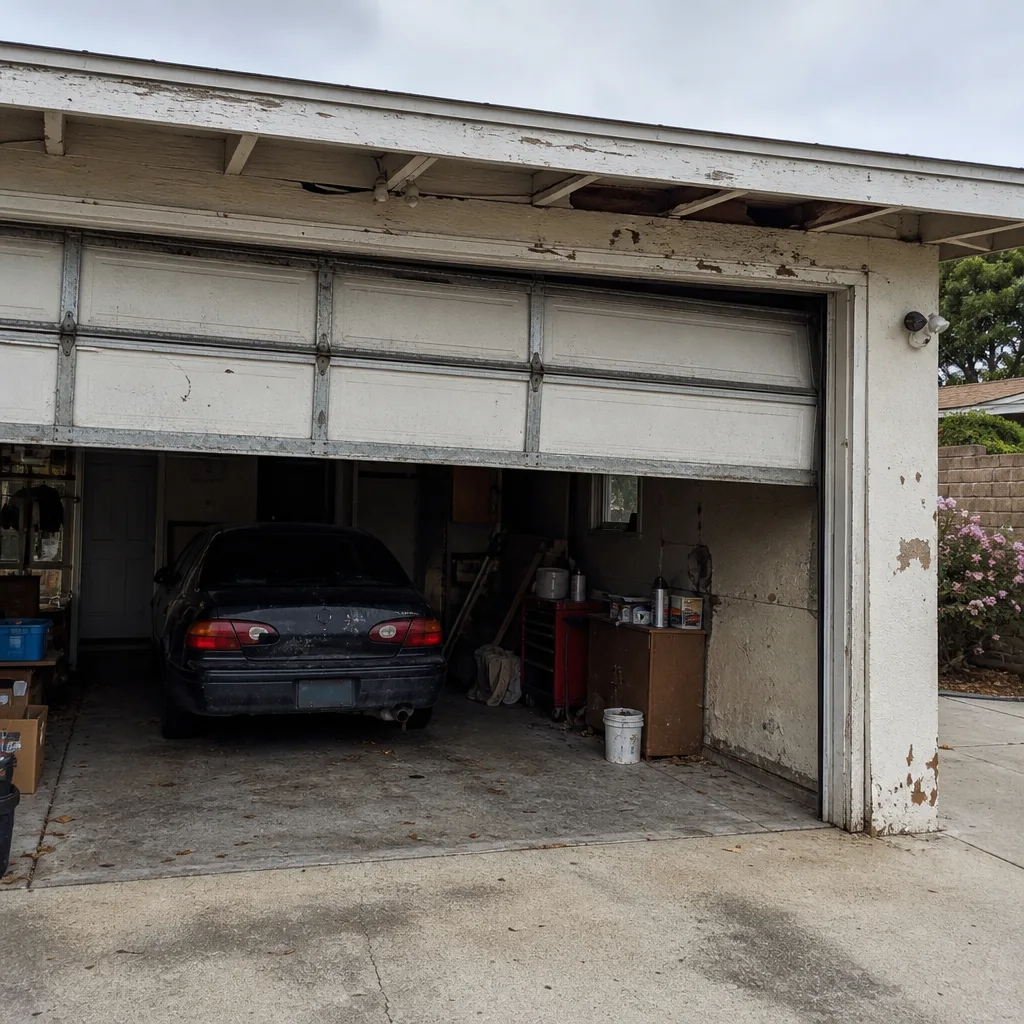 Before
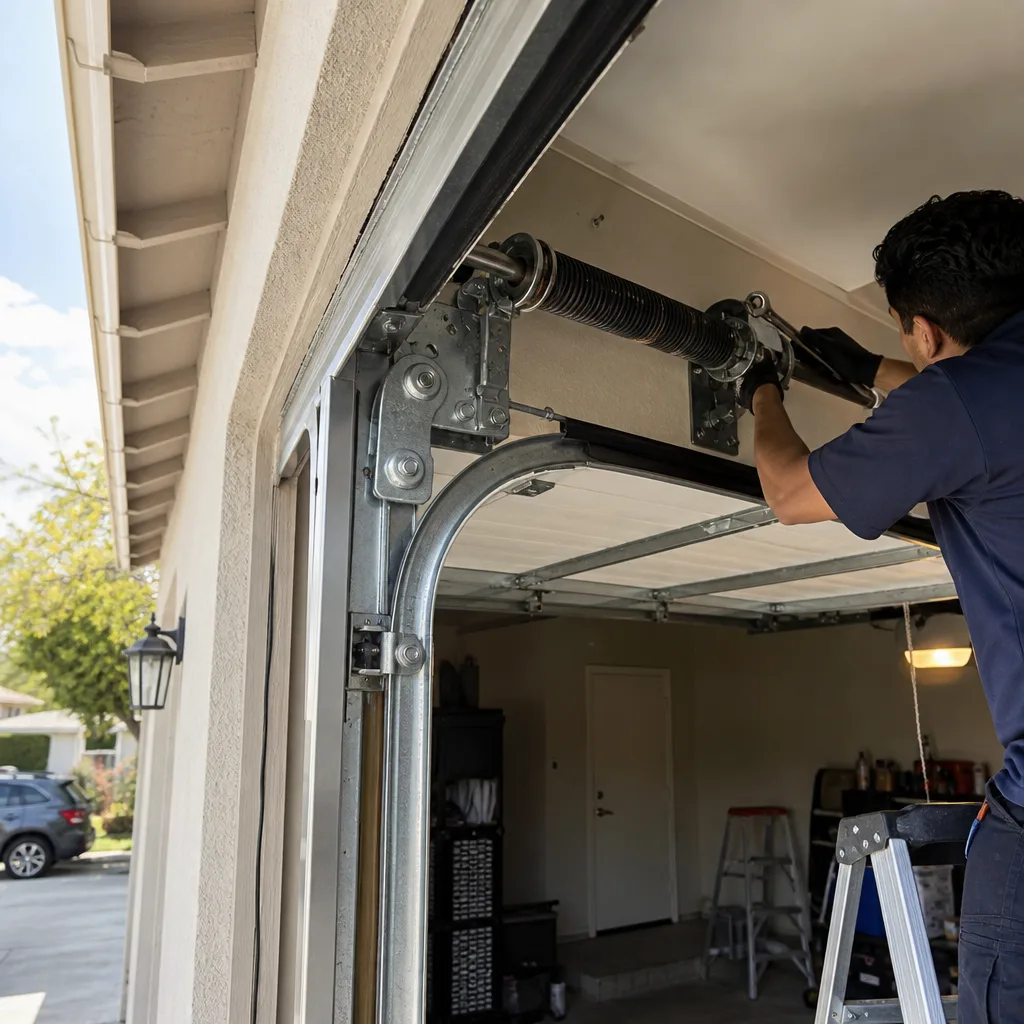 After
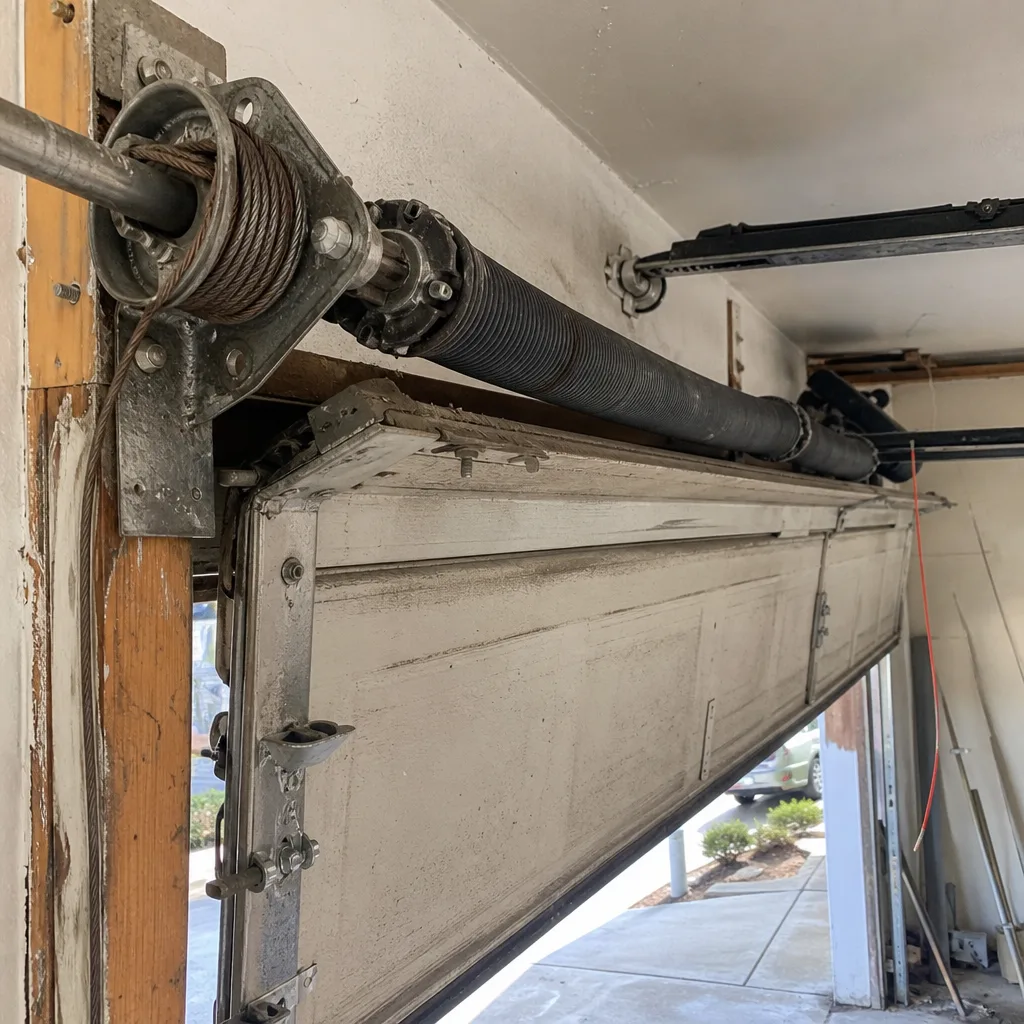 Before
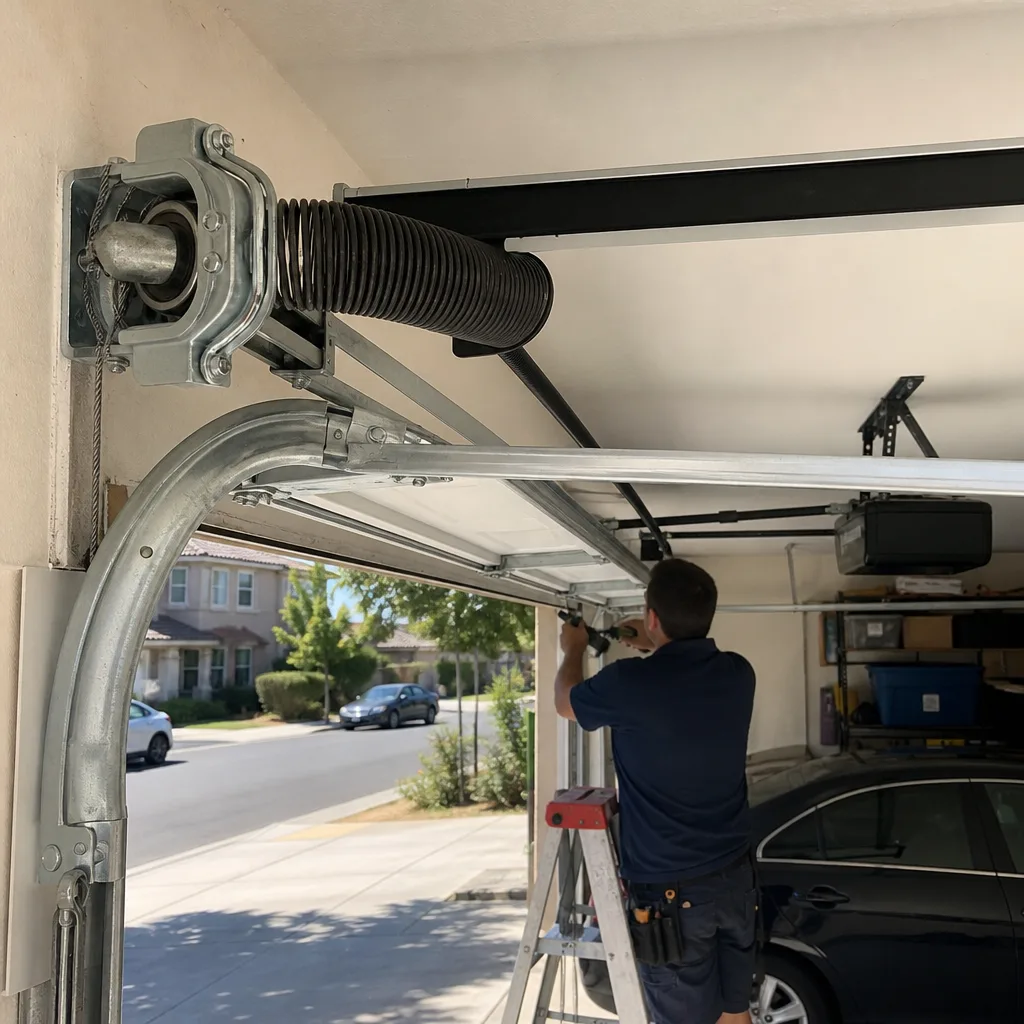 After
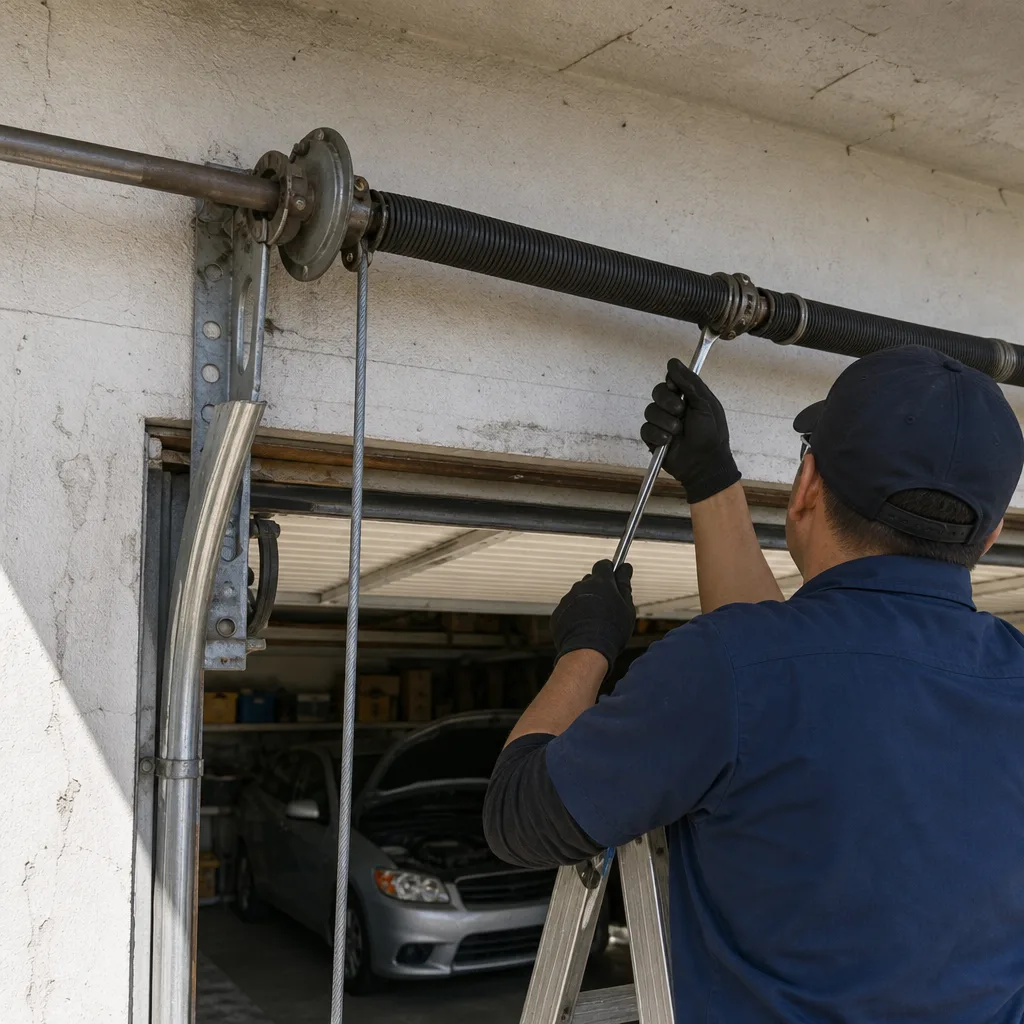 Before
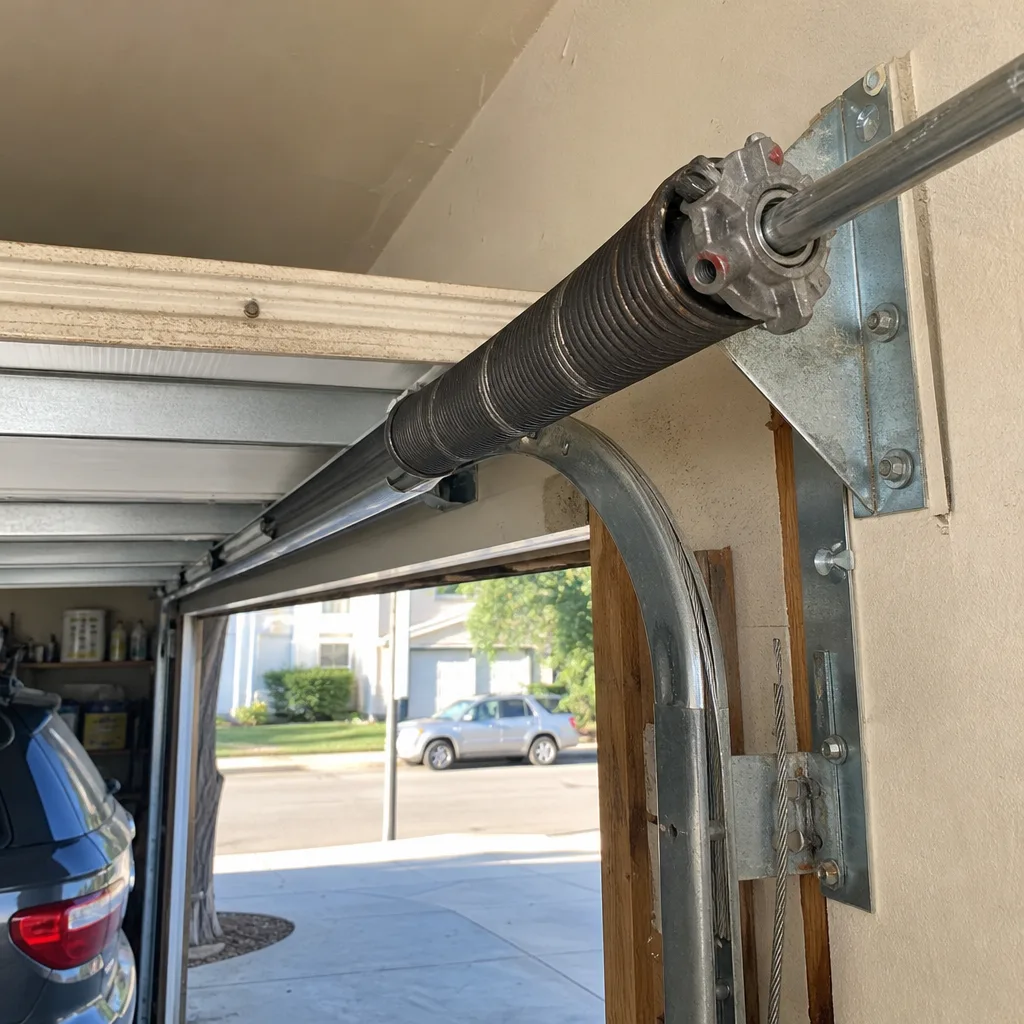 After
Frequently Asked Questions
Every six months is the right interval for Orange’s climate. The heat cycle from May through September causes lubricant to thin and migrate, while Santa Ana dust season creates abrasive buildup. Lubricate in April before summer heat peaks, then again in October after the first major wind event. Use a lithium-based or synthetic garage door lubricant on hinges, roller bearings, and torsion spring coils. Skip the tracks entirely – they should stay clean and dry.
Yes, and it’s one of the most common seasonal causes of garage door problems in Orange. Santa Ana winds force debris into track channels and between door panels, which can throw the door out of alignment. The rapid temperature swings also stress metal components through repeated expansion and contraction. After any significant wind event, walk the door and check for debris in the tracks, then run a full cycle and listen for new sounds. Call (844) 320-8271 if anything seems off after a wind event.
No. Torsion springs hold enough tension to cause severe injury or death if they release unexpectedly. Even with the right tools, the risk isn’t worth it. This is the one repair where every professional in the industry agrees: leave it to someone trained. A spring that’s rusted, showing gaps between coils, or that fails to hold door balance should be replaced by a professional.
Your opener likely tripped its thermal overload protection. West-facing garages in Orange can hit interior temperatures above 110 degrees in summer, and the motor’s own heat pushes it past the safe threshold. If this happens, let the opener cool down and it should resume working. If it happens regularly, the motor is probably working harder than it should due to a binding door, unbalanced springs, or worn drive gears. Those are all fixable issues – a Garage Door Opener Repair visit from Citadel can identify the root cause.
Mid-April to early May is the ideal window. It’s before the summer heat cycle begins, so any lubrication and repairs you do now will protect the door through the most stressful period of the year. The second-best time is late September, just before Santa Ana season starts. Scheduling twice a year, at these two points, covers both major Orange stress seasons.
Most torsion springs are rated for 10,000 to 15,000 open-and-close cycles, which typically translates to 7 to 12 years for a residential door in normal use. Orange’s climate can shorten that lifespan through thermal stress from temperature swings and corrosion from marine layer moisture. If your springs are rusty, making creaking sounds, or the door no longer stays balanced at the halfway point, the springs are nearing failure. Call Citadel at (844) 320-8271 for a free inspection.
The Bottom Line
Orange doesn’t have winter, but it has three distinct stress periods that demand attention: summer heat that breaks down lubricants and attacks finishes, Santa Ana winds that force debris into tracks and stress springs through temperature swings, and marine layer moisture that corrodes unprotected metal. Each stress period has a specific preparation protocol, and following the seasonal schedule in this guide takes about 30 minutes per year. The alternative – waiting for a failure – costs hundreds or thousands in repairs and leaves your home’s largest moving security barrier compromised. Your garage door is your home’s largest security barrier. Treat it with that consequence in mind, and it will function reliably for its full service life.
Written by the team at Citadel Garage Door Repair, serving Orange since 2018.