
Last updated November 2, 2026
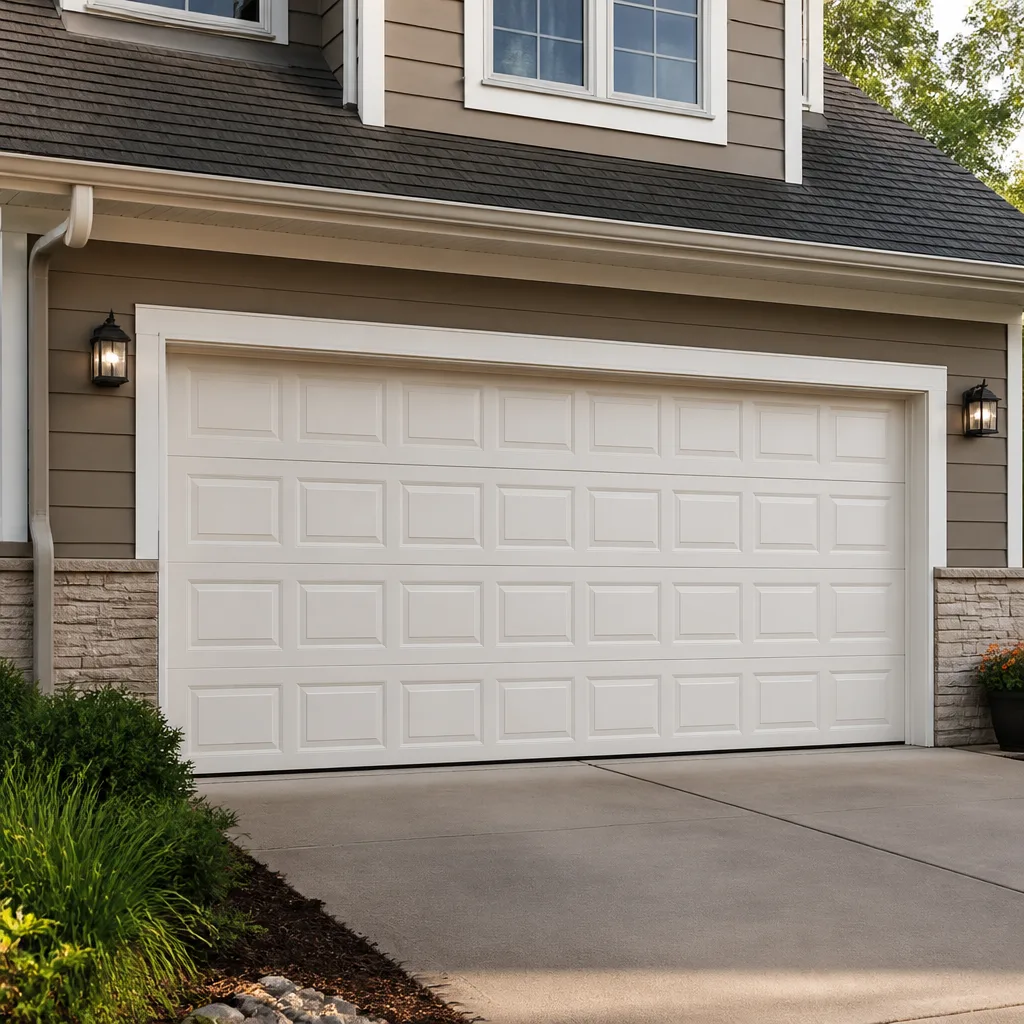 Raised-panel steel
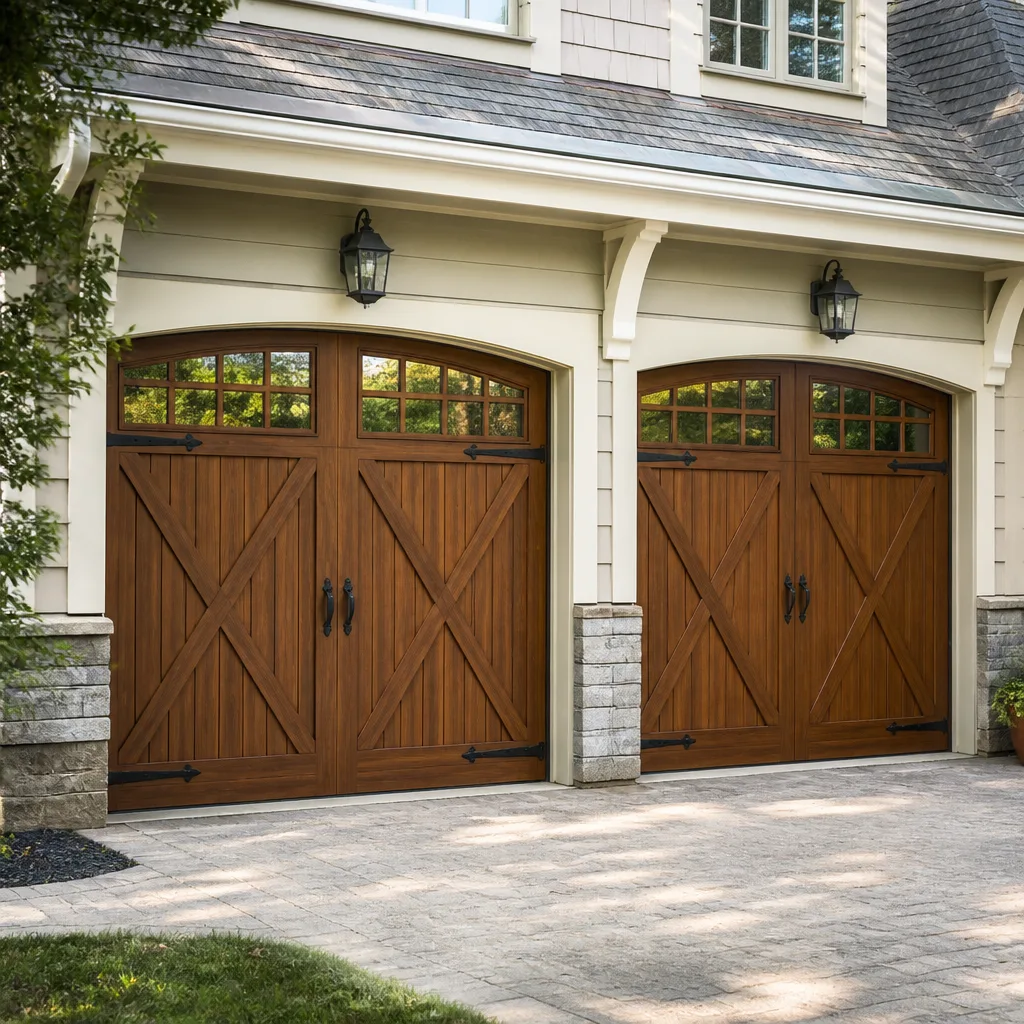 Carriage house
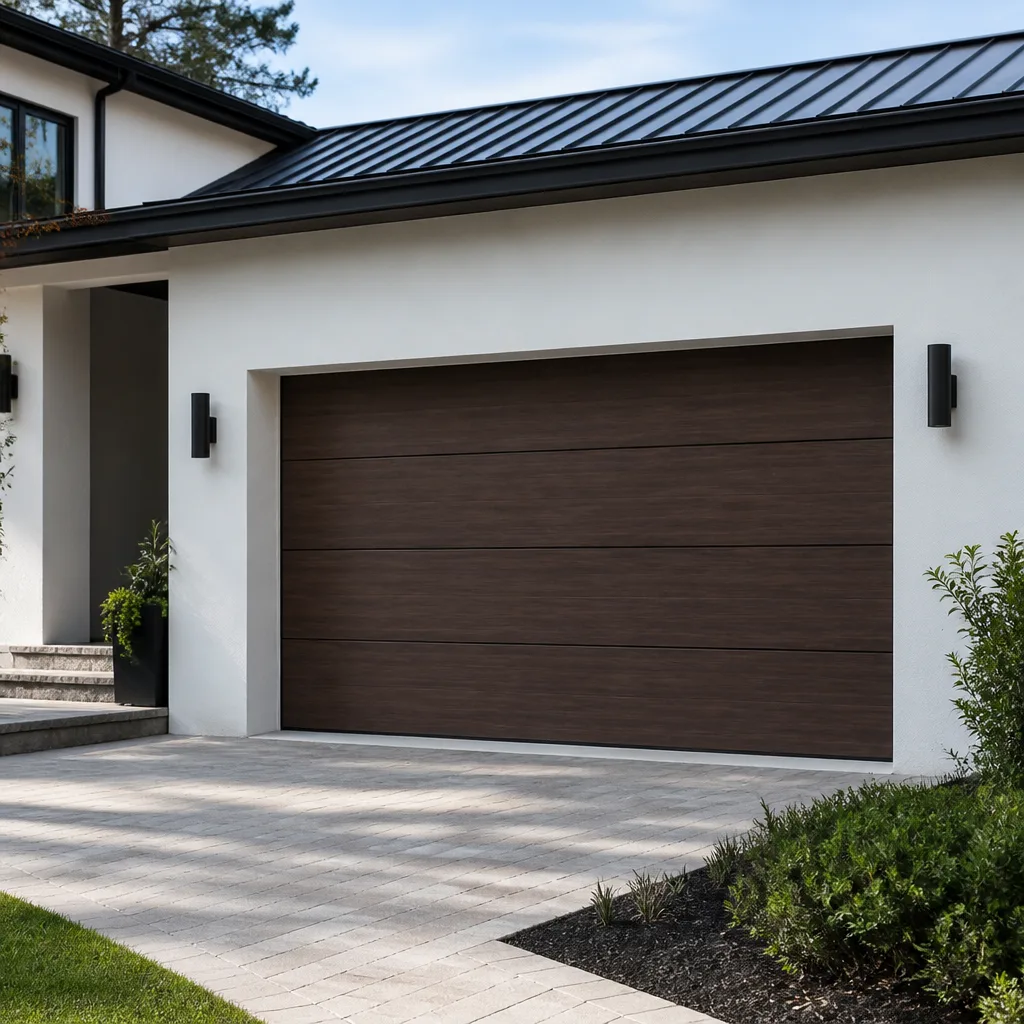 Modern flush
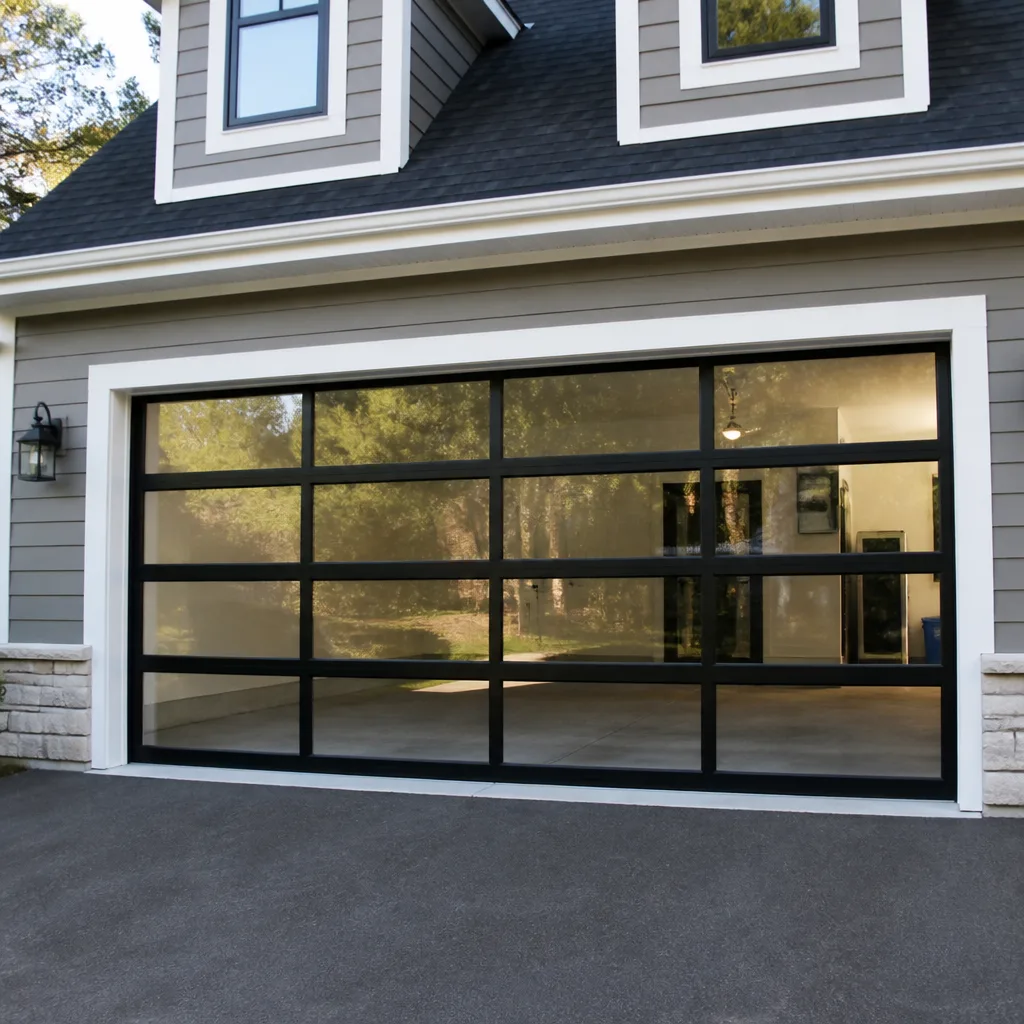 Full-view glass
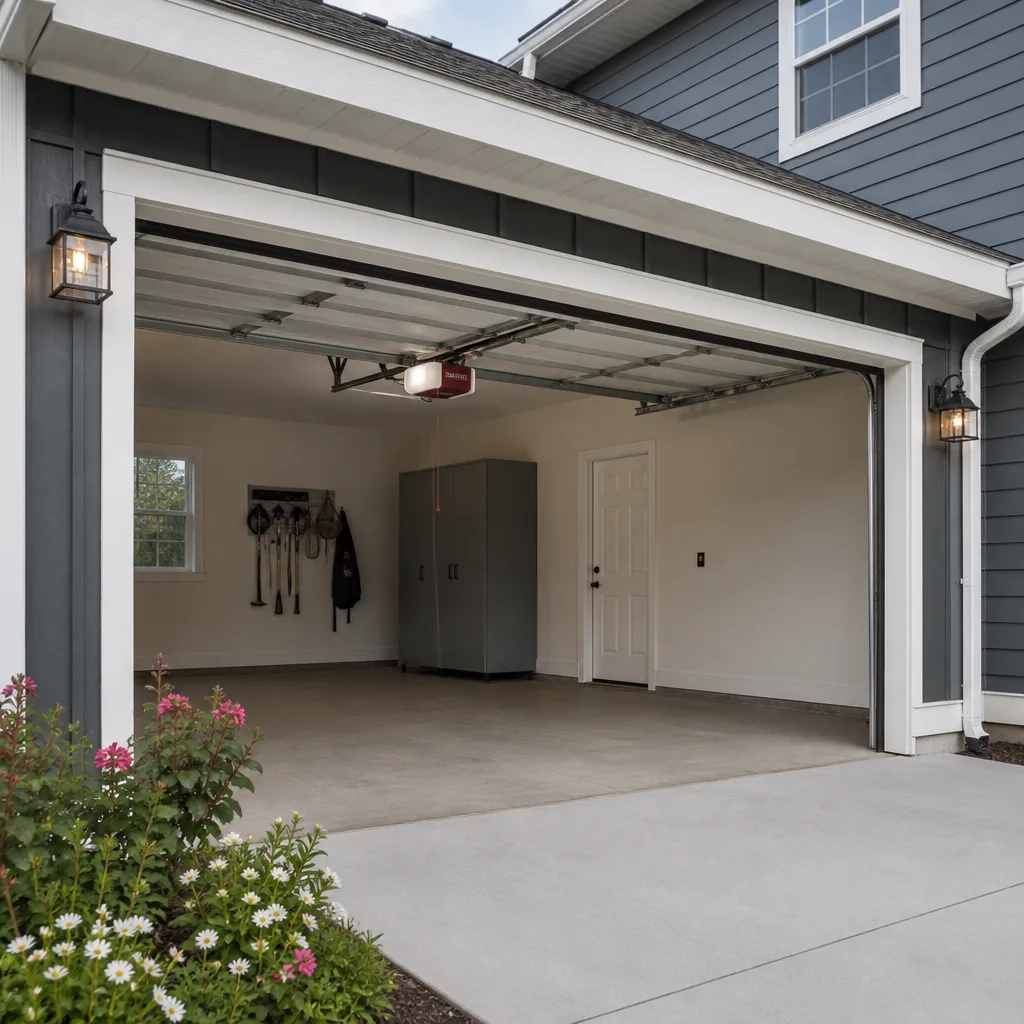 LiftMaster openers
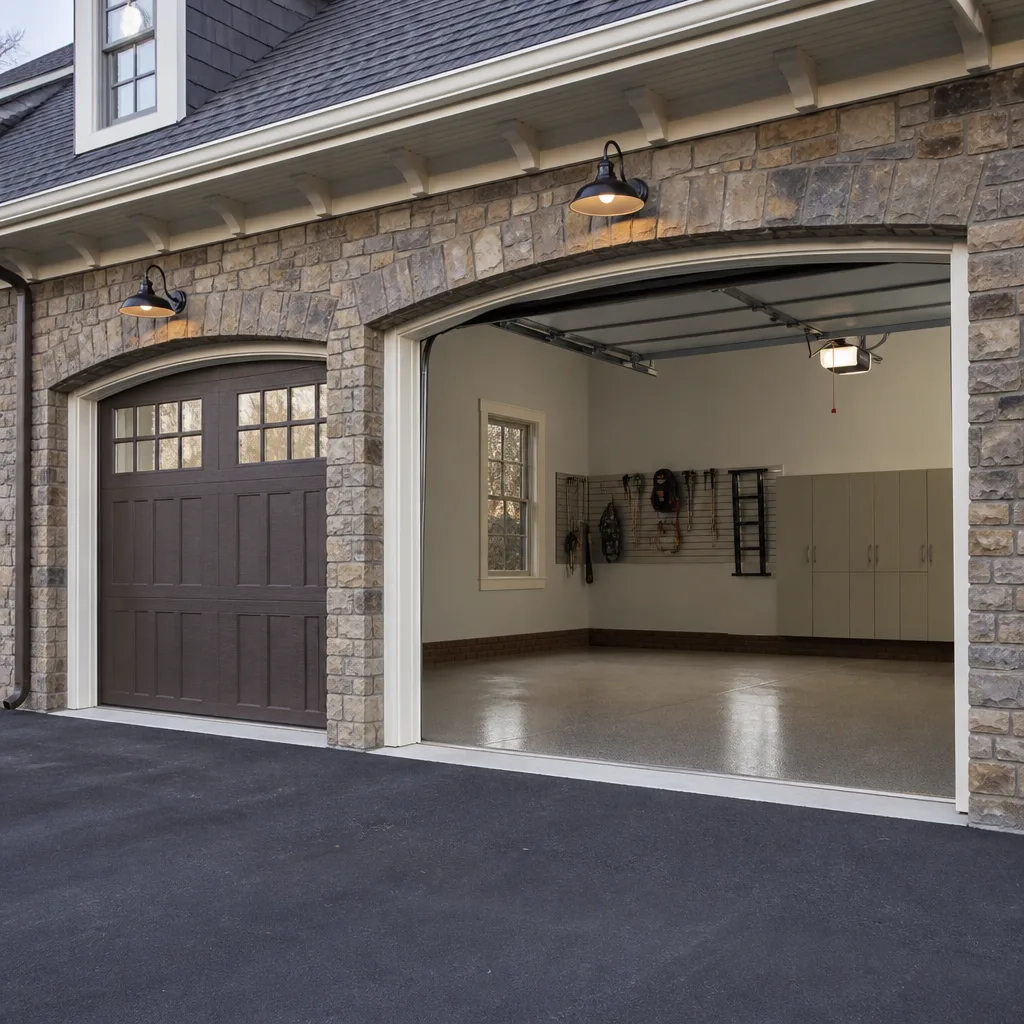 Chamberlain openers
Full 25-point door and opener safety check with every visit - springs, cables, rollers, tracks, and your LiftMaster or Chamberlain opener included
You get a price before we start. It does not change when the truck arrives.
Get your free estimateThe Complete Garage Door Repair Guide for Orange Homeowners
Orange County’s mild climate feels forgiving, but the salt-laden marine layer that rolls in from the Pacific quietly accelerates spring corrosion and cable rust faster than most inland cities. Most Orange homeowners don’t find out until something breaks, usually at the worst possible moment. This guide walks you through the failure patterns we see most often in Orange garages, which repairs deserve a professional, what things actually cost, and how to document your system before you ever pick up the phone. By the end, you’ll know exactly what questions to ask and which problems demand same-day attention.
Quick Answer
Garage door repair in Orange, CA typically costs between $150 and $550 depending on the failed component, with torsion spring replacement averaging $280 to $340 per spring. Most repairs, including spring failures, cable breaks, and opener issues, can be diagnosed and fixed in a single visit by a qualified technician. If your door is making unusual noises, moving unevenly, or refusing to open, shut it off and call for an inspection before attempting to force it.
Styles & brands we work with
- Raised-panel steel
- Carriage house
- Modern flush
- Full-view glass
- LiftMaster openers
- Chamberlain openers
Table of Contents
- How Orange’s Climate Affects Your Garage Door
- Common Garage Door Configurations in Orange Homes
- Torsion Springs: The Component That Fails First
- Cables, Brackets, and Rollers: Supporting Cast That Matters
- Opener Systems: Drive Mechanisms and Failure Modes
- Documenting Your Door and Opener Before You Call
- DIY vs Professional: A Decision Tree
- Seasonal Maintenance for Orange’s Dry-Wet Cycle
How Orange’s Climate Affects Your Garage Door
Orange sits far enough inland to avoid the worst coastal fog, but close enough to the Pacific that morning marine layer reaches most neighborhoods east of the 55 and south of the 91. That moisture doesn’t just sit on your windshield, it settles on exposed metal in your garage. Torsion springs, hinge plates, cable drums, and bottom brackets all develop surface oxidation faster here than in, say, Riverside or San Bernardino.
What makes Orange’s climate uniquely hard on garage doors isn’t extreme temperature. It’s the cycle. Mornings bring moisture-laden air that condenses on cool metal. By afternoon, dry Santa Ana-influenced air pulls that moisture back out. Repeat that cycle a few hundred times a year and you get a specific pattern of degradation: springs lose their protective coating through micro-pitting, cables develop thin rust lines at stress points, and bottom brackets corrode where drainage from the driveway splashes upward. We see this pattern constantly in homes throughout Orange’s older tract neighborhoods, especially those built before 1990 when garage ventilation was less standardized.
The practical takeaway is this: a garage door that would last 10-12 years in a dry inland city might need spring replacement at 7-9 years in Orange. Not because the spring was defective, but because the microclimate eats coatings. This is why maintenance intervals matter more here than the national averages in most guidebooks suggest.
Common Garage Door Configurations in Orange Homes
Orange’s housing stock follows a clear architectural timeline, and each era brings its own failure patterns. Understanding which era your home falls into tells you which parts to watch before they fail.
1970s-1980s tract homes (think neighborhoods east of the Plaza, around Eisenhower Park, and the older pockets near the 55): These homes mostly have 16×7 steel pan doors, often original or first-replacement. The doors themselves are usually fine, but the hardware, springs, and especially bottom brackets tend to show age. Many of these setups still run extension springs rather than torsion springs. Extension springs fail differently than torsion springs, they stretch and sag before breaking, which gives you some warning if you look.
1990s-2000s developments (the larger planned communities and HOA areas throughout Orange): Most of these have torsion spring systems, often 2-spring configurations on 16×7 or 18×7 doors. The door panels hold up well, but the springs are now hitting or passing their expected lifespan. If your home was built between 1995 and 2008 and you haven’t replaced springs yet, you’re on borrowed time, not because anything was wrong with the install, but because the original springs were designed for roughly 10,000 cycles, which for most Orange households translates to 7-10 years.
Newer custom and semi-custom builds: These often include heavier doors, wood overlays, or insulated steel with opener systems tied into smart home platforms. The failure pattern shifts here: the door itself is overbuilt, but the opener becomes the weak link, especially in homes where the door gets frequent use as a primary entry point.
Torsion Springs: The Component That Fails First
Every garage door system has a counterbalance mechanism, and in Orange, nine out of ten homes use torsion springs mounted on a shaft above the door opening. These springs wind and unwind, storing the energy needed to lift a door that typically weighs between 150 and 400 pounds. When they work, you barely notice them. When they break, it sounds like someone fired a rifle in your garage.
Torsion springs have a finite lifespan measured in cycles, not years. One full open-and-close equals one cycle. A standard spring is rated for around 10,000 cycles. If you operate your door three times a day, that’s roughly nine years. If you use your garage as a primary entry point and cycle it six times daily, you’re looking at four and a half years. The spring that came with your home may have been a lower-cycle economy spring, in which case it could fail even sooner.
Here’s what matters about torsion spring failure in an Orange context:
- Breakage pattern: Springs snap at stress concentrators, which in Orange are often rust pits from the moisture cycle described above. A spring that looks uniformly fine can fail at a single pinprick of corrosion.
- Partial spring failure: Many Orange homes have two-spring systems. When one fails, the door may still open but will sit unevenly, strain the opener, and wear the remaining spring at double speed. Homeowners often miss this and run the door on one spring for months, accelerating damage to the opener gear. We’ve opened doors in Orange where a failed spring had been ignored so long the opener motor was on its way out too.
- The danger factor: Torsion springs operate under hundreds of pounds of torque. Improper winding or release can cause catastrophic injury. This is not home-handyman territory. If a spring breaks, the correct move is to leave the door closed (or secure it open with locking pliers clamped to the track above a roller if you need access) and call a professional. At Garage Door Repair in Orange, we replace torsion springs as a matched pair, not one at a time, because the surviving spring has the same cycle count as the failed one and will break soon after.
Cost reality for Orange: A pair of torsion springs typically runs $280 to $340 installed in Orange, depending on door weight, spring size, and cycle rating. Higher-cycle springs cost slightly more initially but outlast standard springs meaningfully. When a technician gives you a quote, ask what cycle rating the springs carry. A 20,000-cycle spring might add $40 to $60 per spring but doubles the lifespan.
Cables, Brackets, and Rollers: Supporting Cast That Matters
Springs get the attention because they fail loudly, but in Orange’s coastal-influenced air, the quieter components often fail first, and they fail in ways that turn a $150 repair into a $900 door replacement if ignored.
Lift cables: These steel cables run from the bottom brackets, up and over the drums at each end of the spring shaft, and carry the load when the spring unwinds. In Orange, cables develop rust at the point where they wrap around the drum, the exact spot under maximum tension. A frayed cable is a time bomb. If it snaps while the door is in motion, the door can drop suddenly on one side, bending the track and damaging panels. Hairline rust or a few broken strands around the drum area means replacement is overdue. This is a 30-minute job for a pro with the right spooling technique and a genuine hazard if done wrong.
Bottom brackets: These attach the cable to the bottom corners of the door. In Orange, driveway drainage and morning condensation make these among the first components to show rust. When a bottom bracket rusts through, the cable releases, and the door can tilt and jam in the track. We recommend Orange homeowners visually inspect bottom brackets twice a year, especially if your driveway slopes toward the garage and channels water toward the door.
Rollers: Nylon rollers wear out every 7-10 years and announce themselves with rattling during travel. Steel rollers last longer but are louder. If you hear a grinding or scraping sound coming from the track, shut the door down and have the rollers checked. Running a door on disintegrated rollers chews up the hinges and eventually the track itself, and track replacement is a much bigger job.
“Built for reliability, not repeat visits” isn’t a slogan at Citadel Garage Door Repair home, it’s the standard: when we replace a cable, we inspect the associated bracket and roller in the same visit, because those components wear as a unit in Orange’s climate.
Opener Systems: Drive Mechanisms and Failure Modes
The opener is the most misunderstood part of the garage door system. It’s not designed to lift the door’s weight; the springs do that. The opener’s job is to move the door along the track. When springs fail and the opener keeps getting used, the opener’s motor, gear, and drive system absorb punishing loads they were never designed for, and the opener dies shortly after.
Orange homes show a clear brand distribution in openers, and we work on what you already have rather than pushing a replacement. The most common openers we service in Orange are:
- LiftMaster (chain, belt, and screw drive across three decades of models, from mid-90s square-button units to current models with battery backup and smart integration)
- Genie (older screw-drive models are common in 80s and 90s Orange homes, along with newer belt-drive units)
- Chamberlain (frequently found in homes built after 2005, especially in HOA communities that standardized door systems)
- Craftsman (though no longer manufactured, these remain widely installed in Orange and we still service and repair them regularly)
Opener failure modes tend to be consistent regardless of brand. The most common are:
- Stripped drive gear: Especially common in chain and screw drive units older than 7 years. Symptoms include a grinding noise from the unit while the door doesn’t move. This is a $120 to $200 repair on most models and takes about an hour.
- Logic board failure: Surges from Southern California Edison interruptions or lightning strikes during monsoon-season remnants can take out the control board. Replacement boards run $150 to $250 installed.
- Limit switch drift: The door opens too far or not enough, reverses on its own, or doesn’t fully close. This sometimes requires only adjustment, not parts.
- Capacitor failure: The motor hums but doesn’t turn. A $45 capacitor resolves it on many models.
- Photo-eye misalignment or failure: The door won’t close but opens fine. Check for dirt, spider webs in the lens, or a loose bracket before calling. Orange’s dry stretches create a lot of dust, and photo-eyes are dust magnets.
Because we service the opener drive system and the physical door mechanics together, we catch issues single-trade shops miss, like an opener working hard because a spring lost tension two months ago. One call covers the door and the opener. When your opener fails in Orange, start with Garage Door Opener Repair in Orange before assuming you need a full replacement.
Documenting Your Door and Opener Before You Call
This is the section most guides skip, but it’s the one that saves you the most money and time. Before you call any repair company, spend five minutes gathering information. A technician who shows up knowing your door’s brand, model, and spring configuration brings the right parts the first time. A technician who shows up blind has to diagnose, leave for parts, and return, which costs you either more money or two appointments.
Here’s what to document:
- Door brand: Look for a manufacturer name or logo on the inside of a panel, the bottom corners, or the bottom weather seal. Common brands in Orange include Wayne Dalton, Clopay, and Amarr, but older doors may be labeled Raynor or have no branding at all. Photograph any label you find.
- Door size: A standard door is 16 feet wide by 7 feet tall, but Orange’s older tracts sometimes have 8-foot or 9-foot doors. Measure width and height if unsure. This matters for spring sizing and panel replacement.
- Opener brand and model: The model number is on the motor housing, usually on the side or back. Photograph it. Older units may have labels on the underside. This tells the technician which parts to bring.
- Spring type and count: Look above the closed door. Torsion springs sit horizontally on a shaft; you either see one or two. Extension springs run vertically along the upper tracks on each side. Count them and photograph the setup. If a spring is already broken, note whether it’s the left or right side.
- Symptoms: Write down exactly what happens when you press the opener: does it hum, move partway, reverse, or do nothing? When did it start? Is there visible damage to cables or panels? The more specific you are, the faster the diagnosis.
- Your HOA rules, if applicable: Many Orange developments require specific door styles or colors. If you’re replacing rather than repairing, ask your HOA for the current spec before a technician arrives. Most HOAs in Orange are cooperative but some require pre-approval for color changes.
This documentation gives the technician what we call diagnostic head start, and it’s the difference between a one-trip fix and a two-trip estimate in a meaningful share of cases.
DIY vs Professional: A Decision Tree
Some garage door tasks are genuinely safe for a capable homeowner. Most are not. Here’s a clear decision tree based on what we see in Orange homes:
Safe for most DIY homeowners:
- Lubrication: Spraying the rollers, hinges, and springs with a silicone or lithium-based lubricant twice a year. This is the highest-value maintenance task you can do yourself and requires no disassembly.
- Photo-eye cleaning: Wiping lens surfaces with a dry cloth and checking for obstructions. Dust from Orange’s dry months makes this a recurring need.
- Weather seal replacement: Sliding a new bottom seal into the aluminum retainer channel takes 20 minutes and requires no spring tension.
- Visual inspection: Looking at cables, springs, brackets, and rollers monthly for rust, fraying, or cracks. You don’t fix what you find, but you catch problems before they become emergencies.
Borderline, requires caution and experience:
- Adjusting photo-eye brackets: Usually safe, but if you need a level and repeated tries, call a pro before you damage a sensor.
- Tightening loose hinge screws: Fine to do. Do not loosen or remove any screw connected to a cable assembly or bottom bracket while the door is under tension.
Professional only, no exceptions:
- Torsion spring replacement or winding: The stored energy in a wound torsion spring can kill or maim. There is no safe DIY version of this repair.
- Cable replacement: Cables run under load. A cable released incorrectly can whip and cause serious injury.
- Track repair or replacement: Requires precise alignment. A misaligned track can cause the door to jump the track and fall.
- Opener circuit board or motor work: Capacitors hold charge. Working inside the opener housing without proper training is an electrocution hazard.
For anything in the professional-only list, Garage Door Repair in Orange gives free estimates and we identify the problem before we quote the solution, so you know exactly what you’re paying for before any work is authorized.
Seasonal Maintenance for Orange’s Dry-Wet Cycle
Orange doesn’t have four distinct seasons, and generic maintenance checklists written for Minnesota or Michigan don’t apply here. What Orange does have is a fairly predictable cycle: a damp, foggy spring; a long, dry summer; and a short, sometimes intense rainy period in winter. That cycle maps directly to which garage door components need attention when.
Spring (March-May): This is when the marine layer is most persistent east of the 55. Focus on rust prevention. Lubricate exposed metal surfaces. Inspect spring coatings for pitting. Check cables for rust lines near the drums. If you see rust starting, a pro can apply a protective treatment before it penetrates.
Summer (June-September): Heat and dust are the enemies. Rollers build up dry friction, and track dust can cause grinding. Lubricate again, clean photo-eyes, and check that weather seals haven’t cracked in the sun. This is also the season when garage doors see their heaviest use as kids cycle in and out all day, so spring cycle counts climb quickly.
Fall (October-November): Santa Ana winds bring dust and static, but temperatures are moderate. This is the best time in Orange to schedule any deferred repair before winter rains arrive. A proactive inspection in October catches cable wear and bracket rust before moisture makes it worse.
Winter (December-February): When rain does come, the lower seal on the garage door is your line of defense against water intrusion. Check it for cracks and gaps, especially in Orange homes with sloped driveways that direct runoff toward the door. Check bottom brackets for rust acceleration during this period. After a heavy rain, inspect the interior of the door’s bottom panel for water uptake.
For homeowners who don’t want to think about any of this, we do full-system inspections in Orange for a flat rate, with a written report of what’s fine, what’s declining, and what’s urgent, no upsell pressure, just the facts your door is telling us.
Why Brand Compatibility Matters for Orange Repairs
One of the most common questions we get from Orange homeowners is whether we can work with their specific door and opener brands. The short answer: yes, and this matters more than most people realize. A technician who has only ever worked on one brand’s current product line will diagnose by pattern-matching to that brand’s known behavior. When your door doesn’t match that pattern, the diagnosis takes longer and the odds of a misdiagnosis climb.
Our team is factory-familiar with the brands most widely installed in Orange homes over the last four decades. That includes LiftMaster, Chamberlain, Genie, Clopay, Amarr, Wayne Dalton, Craftsman, and Raynor. Each has its own quirks: Wayne Dalton’s TorqueMaster spring system is entirely different from a standard torsion setup, and a tech who doesn’t recognize a TorqueMaster will waste an hour. Craftsman openers from the 2000s share internals with Chamberlain but used different gear assemblies in certain years. Raynor doors use proprietary hinge profiles on some lines. Knowing these differences up front means we bring the right parts and arrive with the diagnosis already half complete.
The flip side of multi-brand knowledge is that we’re not locked into pushing any one manufacturer’s product. When replacement is the right call, your budget and your situation drive the recommendation, not a supplier relationship. We work on what you already have, which for most Orange homeowners means getting the existing system back to dependable service, not undertaking a full swap because the service truck only stocks one brand.
Common Mistakes to Avoid
- Ignoring a grinding or squealing noise for months. Every noise is diagnostic. Grinding usually means rollers or a drive gear. Squealing means dry bearings. Both are cheap to fix early and expensive to ignore. In Orange’s dust-heavy summer, grinding noises from the track are the most common early-warning signal we hear about after the fact.
- Running the opener on broken springs. This turns a $300 spring replacement into a $700 spring-plus-opener repair. If your door feels heavier than normal or sits unevenly, stop using it and call. The opener isn’t designed to carry the door’s full weight.
- Attempting torsion spring DIY after watching a video. We have seen the aftermath. The risk isn’t just to the person working on it; an improperly wound spring can fail catastrophically days later when you’re not expecting it. Your garage door is your home’s largest security barrier. Treat it with the same caution you’d treat any system under high tension.
- Quoting a repair over the phone without documentation. Any company that quotes a torsion spring price over the phone without knowing your door size, spring count, and spring type isn’t being honest. The price depends on all of those variables. A reputable technician gives a firm price after inspecting the door, not before.
- Skipping the bottom seal in Orange’s rainy season. A cracked bottom seal lets water, dust, and rodents in. In Orange’s winter rain pattern, water running down a sloped driveway directly into a broken seal is a common source of panel rust. The seal is a $40 part. Panel replacement is not.
- Not verifying what’s actually on the service truck. Some Orange companies run a two-trip model: diagnose, then return another day with parts. Ask whether the technician will have your exact parts on the first visit. If they can’t answer, they may not fully stock their trucks.
- Choosing the lowest-priced quote without checking what’s included. A spring replacement quote that seems too good usually omits something: matching the spring to your door’s actual weight, replacing both springs in a pair, or inspecting the rest of the system. A pair of correctly sized springs wasn’t installed by the lowest bidder for a reason.
See the difference
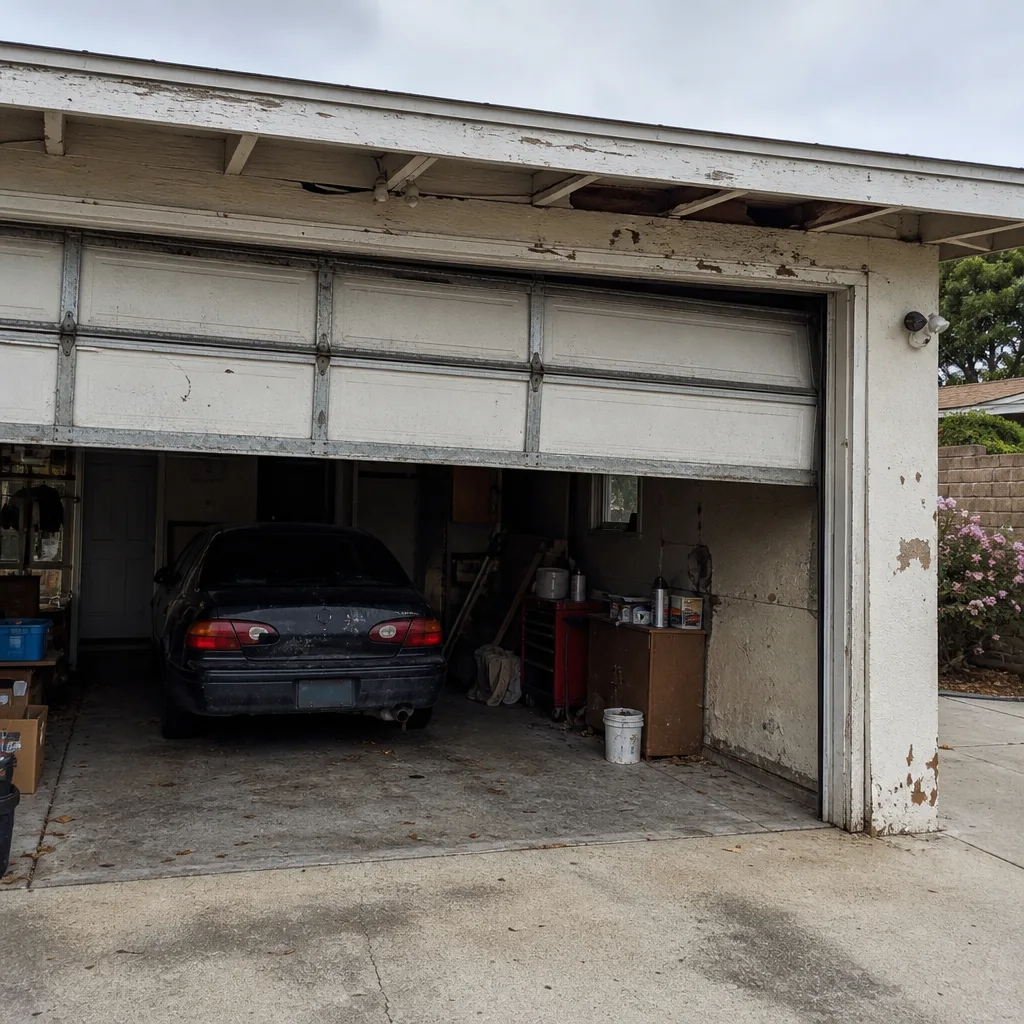 Before
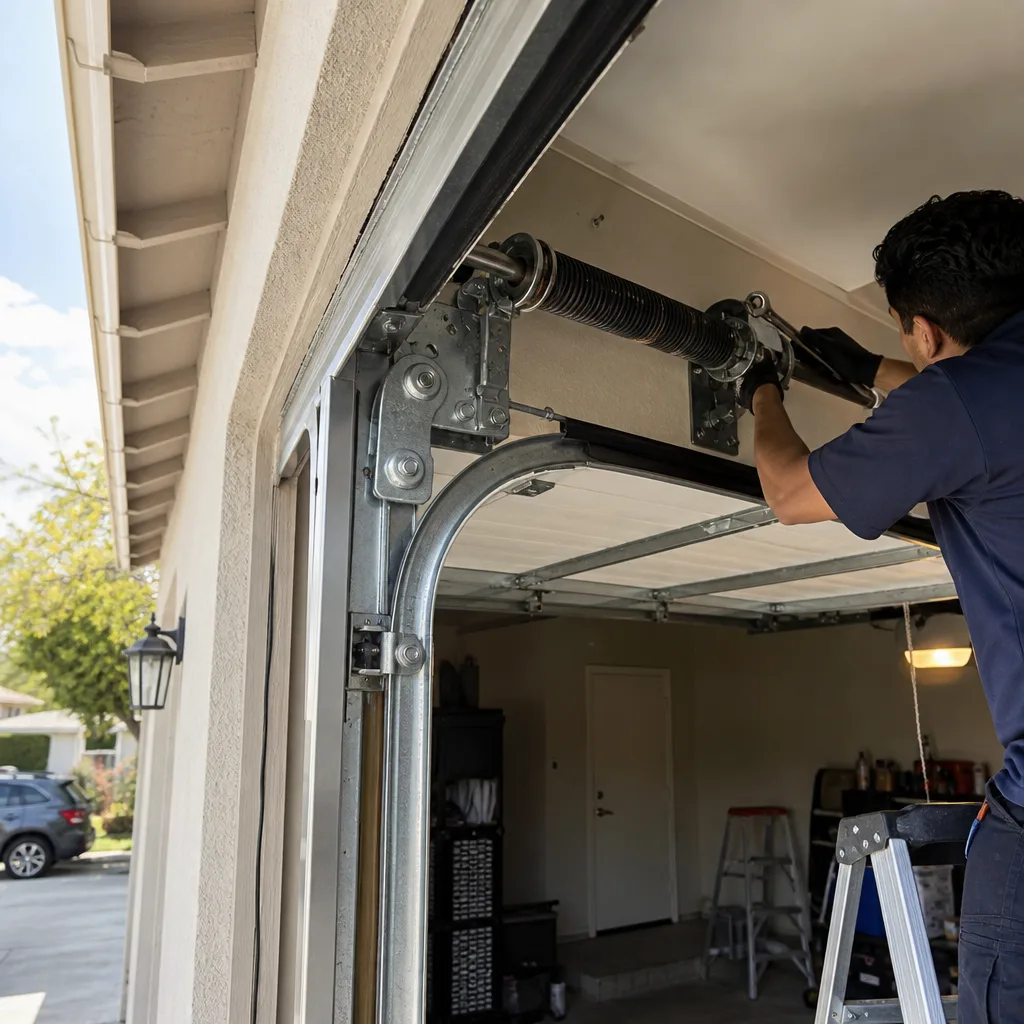 After
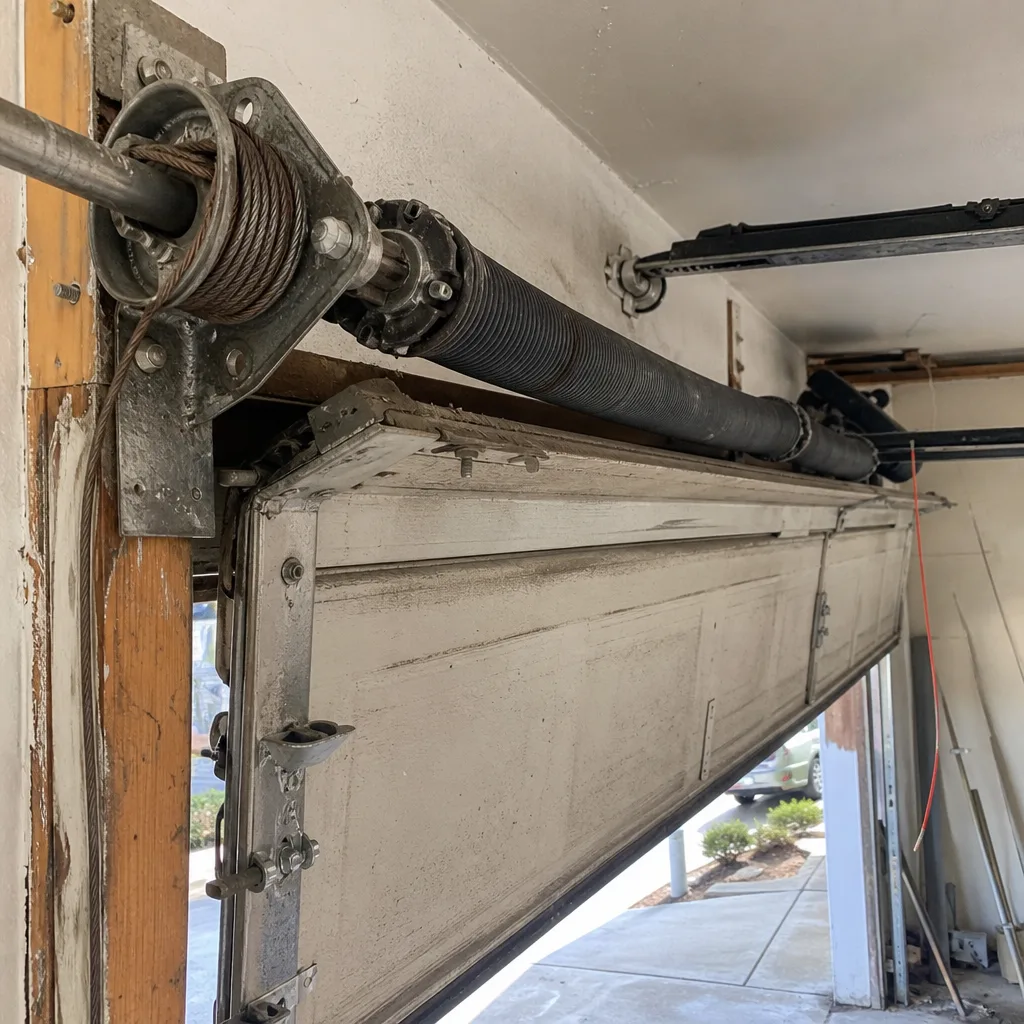 Before
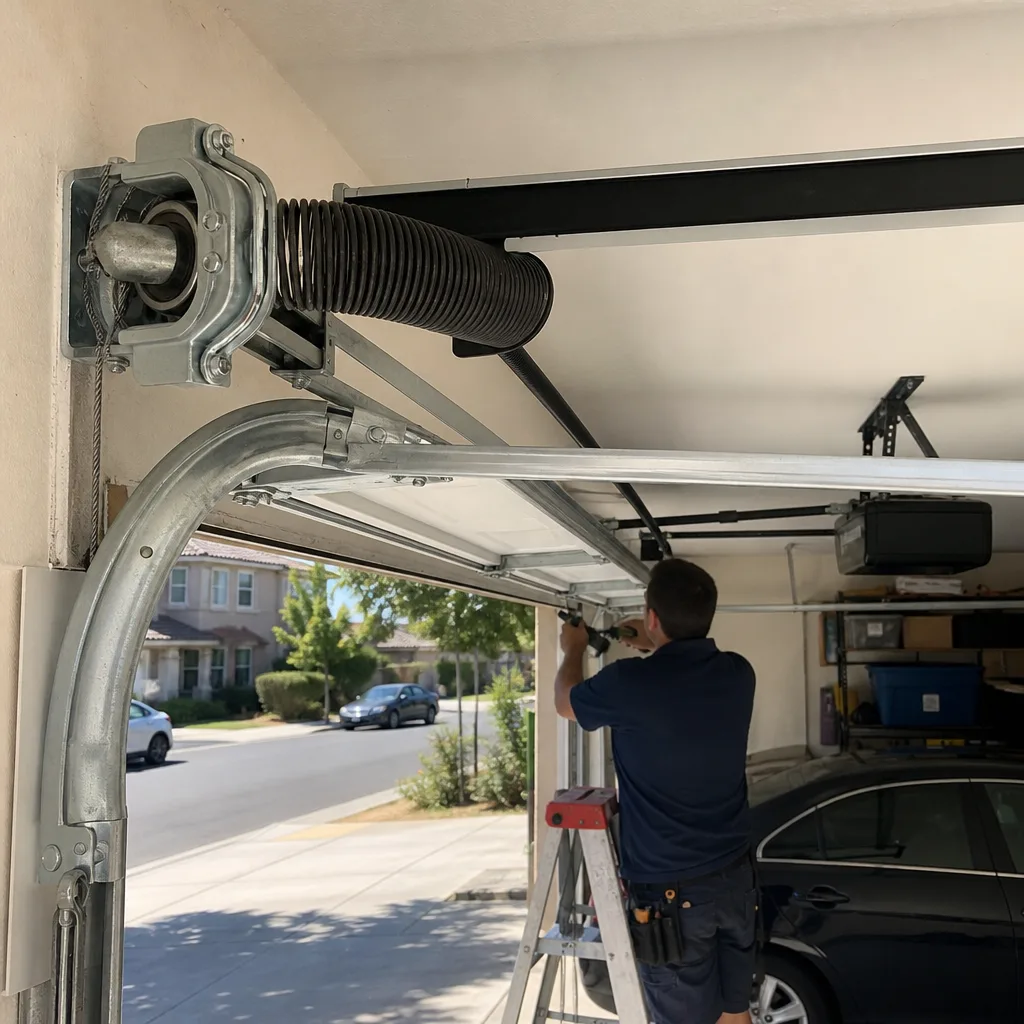 After
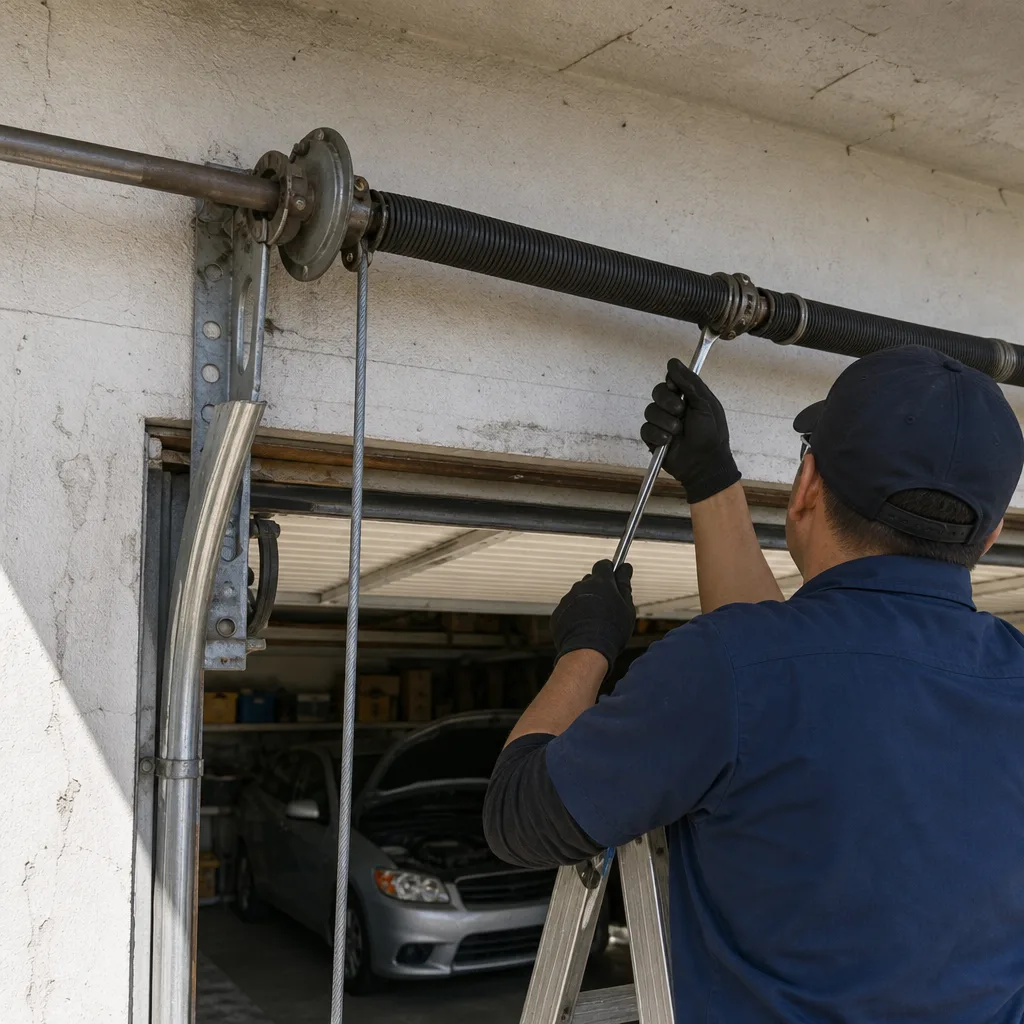 Before
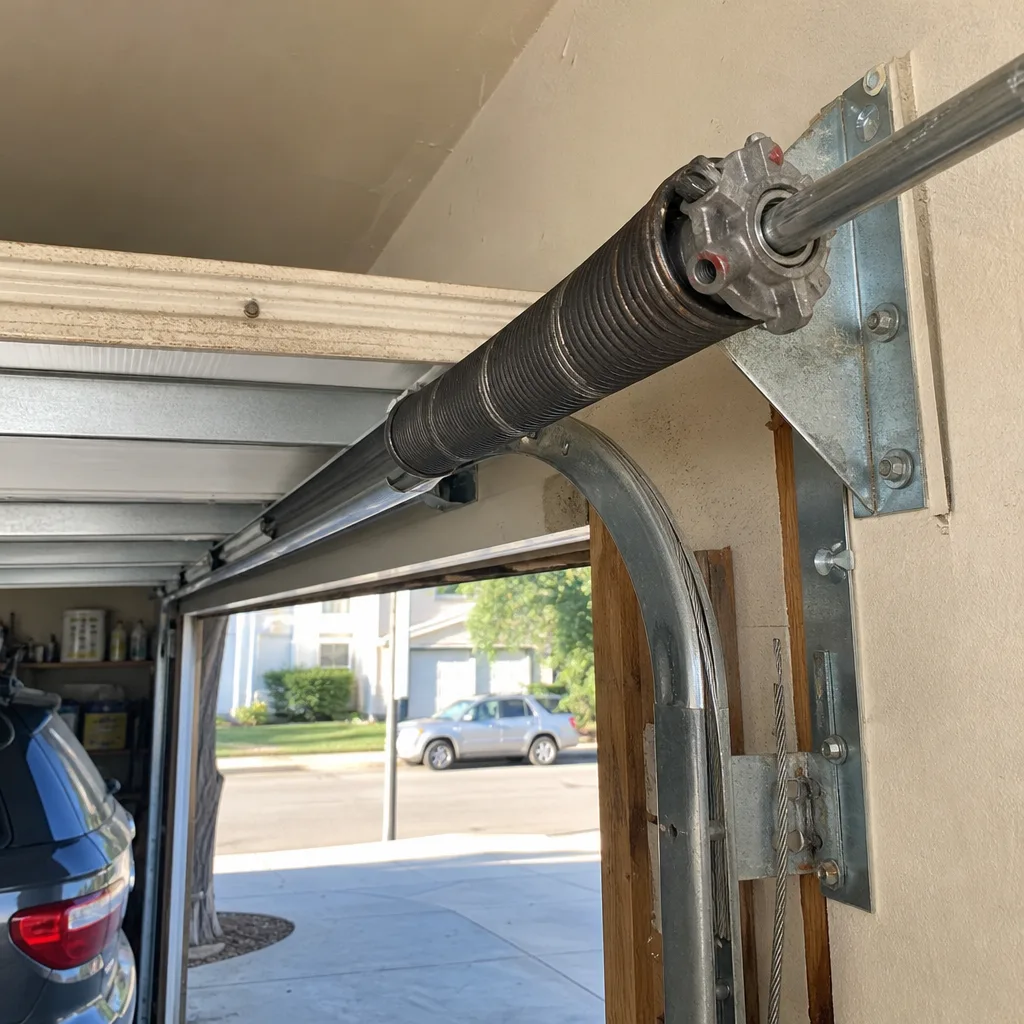 After
When to Call a Professional
You should call a professional immediately if you hear a loud bang from the garage, which typically means a torsion spring has broken. Do not attempt to open the door manually in that state; the door’s full weight is no longer counterbalanced and it can come down hard. You should also call if your door only opens partway, stops and reverses, or visibly jerks during operation. Any visible fraying on the cables, rust-through on the bottom brackets, or a door that sits noticeably tilted are clear calls. If the opener makes grinding noises while the door doesn’t move, stop using it and call before the gear strips completely. Citadel Garage Door Repair offers free estimates in Orange at Garage Door Repair in Orange and we provide upfront, written pricing before any work begins.
Frequently Asked Questions
Most garage door repairs in Orange, CA run between $150 and $550, with torsion spring replacement averaging $280 to $340 per pair and cable replacement around $160 to $220. Minor repairs like photo-eye adjustment or capacitor replacement can run $100 to $200. The final price depends on your door’s weight, spring configuration, and the specific parts involved, which is why we give a written quote after inspecting the door, not over the phone. Call (844) 320-8271 for a free estimate in Orange.
Yes, we prioritize same-day service for spring, cable, and opener failures that leave your garage unusable or your home unsecured, and our trucks carry the most commonly needed parts for the brands we service. If your opener is dead but the door itself is intact, we can often get you back to a secure, operating state on the first visit. Call (844) 320-8271 and we’ll give you a realistic arrival window for Orange.
Yes, and Orange has a lot of them. We regularly service doors from the 1980s and 1990s, including Wayne Dalton TorqueMaster systems, screw-drive Genies, and Craftsman units that are no longer manufactured. In many cases we can repair and return to service openers and doors that other companies would have replaced. We’ll tell you honestly when a replacement is the better economic choice.
No, not if we’ve done our job. The most common reason a repair estimate changes is that the customer described the problem over the phone, but the door revealed two problems instead of one once opened up. We give you the full picture before starting, and we quote the price and get your approval before any work. You’re never committed to a repair you didn’t agree to.
We stock our trucks with the springs, cables, brackets, rollers, gears, capacitors, and photo-eyes most commonly needed across the brands we service, specifically because Orange’s service area demands one-trip fixes. For rare or door-specific parts, we’ll tell you before the visit and schedule accordingly. Call (844) 320-8271 to confirm parts availability for your specific system.
Repair is almost always the right call when the door itself is structurally sound, panels aren’t rusted through, and the track is straight. Replacement makes sense when the door has significant panel damage, the track is compromised, or you want to change insulation, style, or security features. We’ll give you a straight answer on both options in Orange rather than steering you toward a replacement because it’s a bigger invoice.
The Bottom Line
Orange’s marine-layer humidity and dry-wet cycle impose a real but predictable maintenance burden on garage door systems. Torsion springs, cables, and bottom brackets fail earlier here than in drier cities, and the cost of ignoring early warning signs compounds quickly. Documenting your door’s brand, spring configuration, and symptoms before calling a technician saves real time and money. Most importantly, respect the danger of stored tension: torsion springs and cables are not for DIY work. For repairs, opener service, or a full Garage Door Installation in Orange, call (844) 320-8271 for a free estimate, and we’ll give you a straight answer on your next step.
Written by the team at Citadel Garage Door Repair, serving Orange since 2018.